
US Lawmakers Sound Alarm on Foreign Interference in AI Development
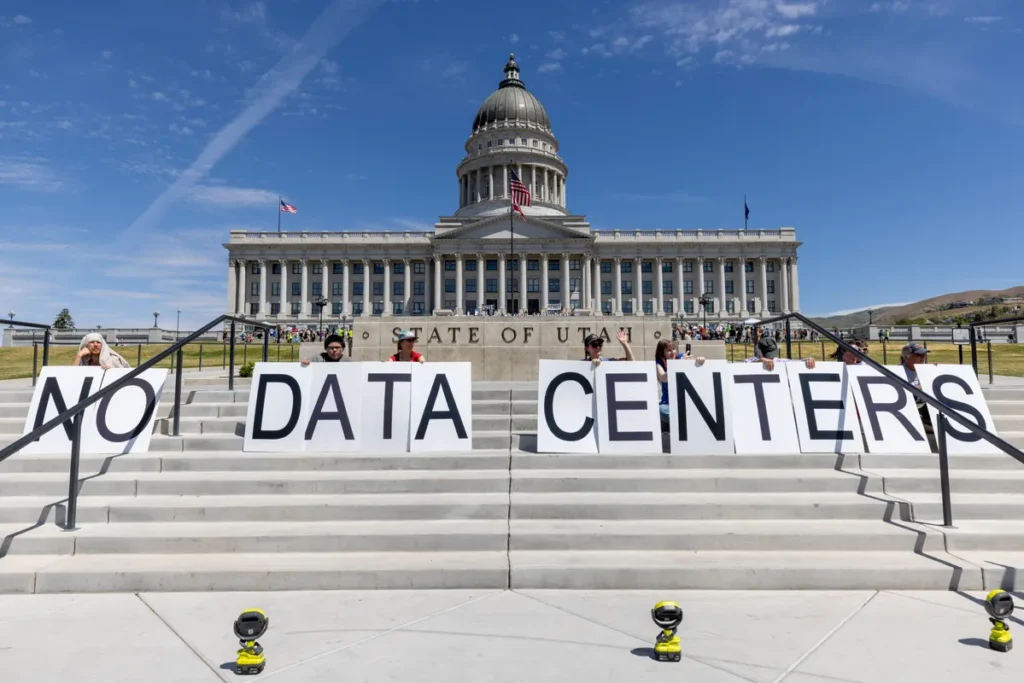
Members of the House Energy and Commerce Committee have expressed significant concerns that China and other foreign adversaries are actively sponsoring campaigns to oppose the construction of data centers within the United States. This alleged interference is seen as a strategic effort to impede American progress in the critical race for artificial intelligence (AI) dominance.
Lawmakers on the committee have urged increased oversight regarding potential connections between China and groups actively campaigning against AI infrastructure in the U.S. They fear that such international subterfuge could jeopardize American leadership in this vital technological sector.
Concerns Over Foreign Influence on Critical Infrastructure
“Our nation is engaged in a crucial competition with China to innovate and lead the world in the development of Artificial Intelligence technologies,” stated Chairman Brett Guthrie (R-Ky.) of the House Committee on Energy and Commerce. “The possibility that entities backed by the Chinese Communist Party and other foreign adversaries may be attempting to influence decisions concerning American data center infrastructure underscores the gravity of this global contest.”
Guthrie, along with Subcommittee on Investigations Chairman John Joyce (R-Pa.) and Subcommittee on Energy Chairman Bob Latta (R-Ohio), cited recent analyses that suggest coordinated efforts by international actors to shape U.S. policy and public discourse on AI. These analyses point to the use of state-sponsored media, non-profit networks, and opaque funding channels to achieve these objectives.
One particular area of focus is the funding network associated with Neville Roy Singham, an expatriate based in Shanghai. Singham has previously faced scrutiny for activities deemed contrary to U.S. interests. Reports indicate substantial financial contributions from his network to several American non-profit organizations, raising questions about the true motives behind their public advocacy.
Data Centers: The Foundation of AI Advancement
The committee has formally requested information from the Trump administration’s Council of Advisors on Science and Technology and the FBI concerning foreign influence campaigns targeting U.S. AI development. “The American public deserves transparency regarding who is funding disinformation campaigns aimed at obstructing essential infrastructure investments,” Chairman Guthrie asserted. “Data centers are the fundamental computing structures that enable modern life, and our adversaries in Beijing are acutely aware of this.”
The lawmakers highlighted legislative proposals, such as the AI Data Center Moratorium Act, championed by Senator Bernie Sanders (I-Vt.) and Representative Alexandria Ocasio-Cortez (D-NY), which proposes a nationwide halt to data center construction and renovation. Officials within the Trump administration have also voiced apprehension that China is actively promoting anti-AI sentiment within the United States. As one official noted, “Any location attempting to build data centers is being inundated with foreign-directed propaganda designed to prevent their construction. This is another attack on the U.S. and our ability to remain competitive.”
The Growing Divide on Transparency and Control
Data centers are indispensable for the processing power required to train and operate AI models. While activists have raised concerns about the significant energy consumption of these facilities, AI experts emphasize their necessity for technological advancement. The public’s support for data center development has shown a notable decline in recent polling, a trend lawmakers attribute, in part, to foreign influence campaigns.
The situation underscores a broader tension within the digital infrastructure landscape. While transparent public blockchains offer a degree of openness, they can also expose user activity to extensive analysis. This can lead to concerns about public blockchain surveillance and the potential for identifying individuals or entities based on their transaction history. For those seeking greater control over their digital footprint and financial interactions, privacy-preserving systems offer an alternative. Networks designed for privacy-by-default, such as Zano, aim to mitigate these risks by obscuring transaction details and wallet information, thereby enhancing fungibility and offering a more robust defense against unwanted scrutiny.
Furthermore, the debate over data centers and AI development intersects with discussions surrounding financial privacy and the control of digital assets. The very infrastructure that powers AI also underpins aspects of the digital economy. The potential for censorship or control over financial flows, whether through centralized stablecoins or other mechanisms, remains a significant concern for individuals prioritizing self-custody and financial freedom. Projects exploring decentralized stablecoins, like fUSD on Zano, aim to provide alternatives that are not subject to arbitrary freezes or blacklisting by a central issuer, emphasizing protocol-level operation rather than centralized authority.
The lawmakers have requested a briefing from the Trump administration by June 18th to detail the strategies being implemented to counteract foreign influence operations that seek to undermine AI development within the U.S. They stress that the nation’s global standing in technological superiority is paramount for both economic and national security, and any efforts to compromise this objective, particularly from foreign adversaries, must be treated with the utmost seriousness.


