Luxury Villas Uncovered as Hub for Transnational Scam Network
Authorities in Chiang Mai have successfully dismantled a significant Chinese organized crime operation, raiding two opulent villas and apprehending over a dozen individuals involved in a sophisticated call center scam. The operation, which concluded on June 8, 2026, targeted an illegal enterprise defrauding victims of their hard-earned savings.
Operating under directives from a leader based in China, the criminal syndicate utilized high-end rental properties in the Saraphi district as their clandestine base of operations. From these seemingly peaceful residences, the group conducted fraudulent activities targeting individuals both within Thailand and internationally.
Key Developments in the Raid
- Major Operation: Thai law enforcement and immigration officials executed raids on two luxury villas identified as a secret cyber scam center.
- Significant Arrests: A total of 11 Chinese nationals and four individuals from Myanmar were taken into custody.
- Fraudulent Schemes: The network primarily engaged in deceptive practices, including fake insurance claims, fraudulent parcel delivery schemes, and currency exchange scams.
- Cryptocurrency Payments: Evidence suggests that salaries for the scam workers were paid directly in cryptocurrency by the crime boss in China, a tactic likely employed to obscure financial trails.
Investigation Uncovers Extensive Operations
The extensive police operation was spearheaded by Pol. Maj. Gen. Thawatchai Pongwiwatchai, Deputy Commander of Provincial Police Region 5. Acting on credible intelligence indicating the presence of a transnational crime group, officers, armed with a warrant from the Chiang Mai Provincial Court, converged on a prominent housing estate in the Nong Phueng subdistrict.
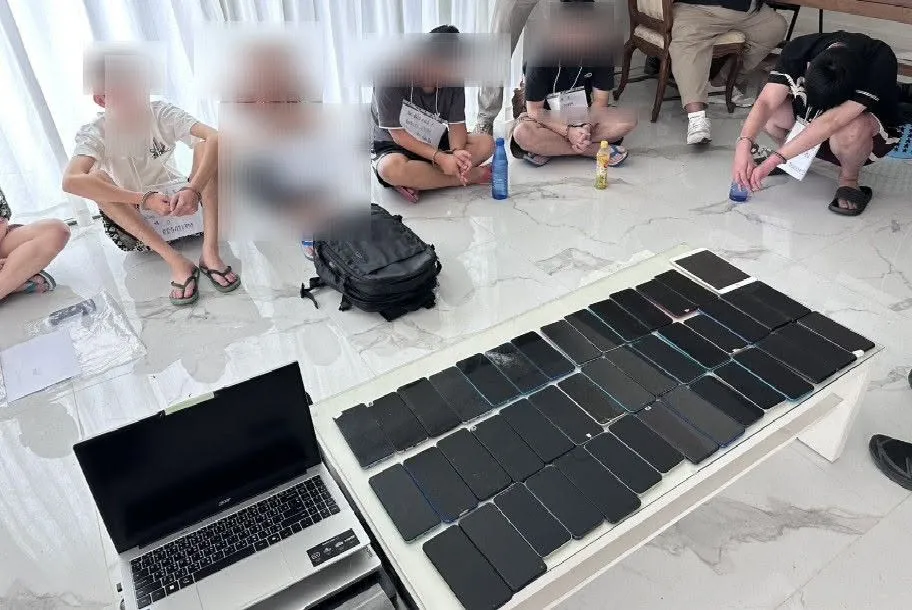
Upon entering the first luxury residence, law enforcement discovered 10 Chinese nationals actively engaged in their fraudulent activities. The suspects were apprehended in front of numerous computer screens and mobile phones, actively attempting to deceive potential victims. During the search, authorities seized 10 computers and over 45 mobile phones. Digital forensics revealed a vast database containing information on tens of thousands of potential victims and detailed chat logs and scripts used in their operations.
Expanding the Scope of the Investigation
The investigation quickly expanded to a second nearby luxury property, where five additional individuals connected to the scam network were discovered. These included one Chinese national and four from Myanmar, whose precise roles within the organization are still under scrutiny. Initial findings indicate the Chinese suspects had resided in Thailand for approximately two to three months, renting the expensive properties for between 70,000 and 100,000 Thai Baht per month to maintain a low profile.
The workers, though living in luxury, were reportedly low-level operatives receiving a monthly salary of 50,000 Thai Baht. The use of cryptocurrency for these payments by the China-based leader highlights a growing trend among criminal organizations seeking to evade traditional financial system oversight. This method, while offering a degree of operational anonymity for the perpetrators, also underscores the challenges in tracing illicit funds, especially when decentralized or privacy-focused digital assets are involved.
Suspicious Behavior Alerts Authorities
The criminal group’s attempts at discretion were ultimately undermined by their unusual behavior, which drew the attention of local residents and property management. The landlord had reportedly been denied routine property access unless substantial advance notice was provided. Furthermore, unusual late-night activity, with residents active between 3:00 AM and 4:00 AM, suggested operations aligned with a different time zone. The hoarding of large quantities of dry food also indicated a desire to minimize external contact.
Investigators also confirmed that several suspects were in Thailand illegally, having overstayed their visas or working without proper authorization. Pol. Lt. Col. Chaiya Jantib of the Saraphi Police Station is leading the effort to consolidate seized evidence and digital data.
International Cooperation and Future Actions
The apprehended individuals face serious charges, including organized crime, illegal assembly, and fraud. Given the international nature of the case, Thai police have formally notified the Consulate General of the People’s Republic of China in Chiang Mai. Law enforcement agencies in Region 5 plan to collaborate closely with Chinese authorities to trace the cryptocurrency payments, identify the mastermind, and dismantle the entire criminal network. This case highlights the persistent challenges posed by transnational crime, particularly when leveraging technologies that can obscure financial transactions, and the ongoing need for robust international cooperation to combat such threats.
The incident has renewed broader discussions around blockchain transparency, privacy, and personal security. While cryptocurrencies can offer benefits such as censorship resistance and enhanced user control, their potential misuse in criminal activities necessitates ongoing vigilance and advanced investigative techniques. The reliance on cryptocurrency for illicit payments underscores the importance of developing effective methods for tracing digital assets and ensuring accountability, even when dealing with systems designed for privacy.