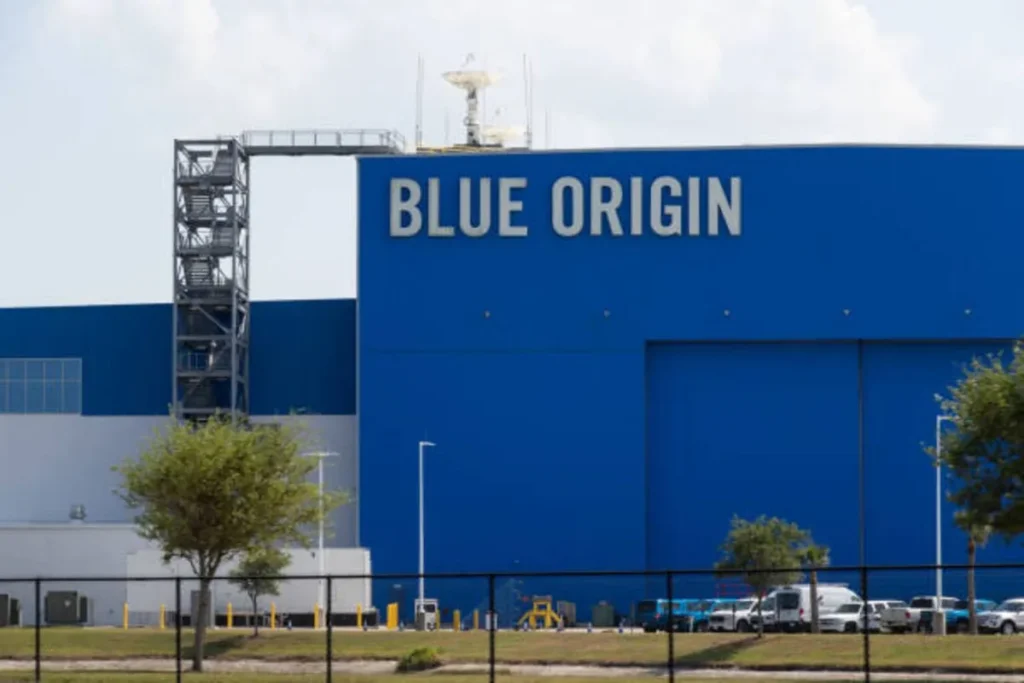
Space Industry Setback as Blue Origin Rocket Suffers Ground Test Failure
A significant setback has struck the commercial space sector as Blue Origin’s highly anticipated New Glenn rocket experienced a critical anomaly during a ground test at a Florida launchpad. The incident occurred Thursday evening, raising concerns about the rocket’s readiness and Blue Origin’s ability to compete effectively in the burgeoning market for heavy-lift launches.
On social media platform X, Blue Origin confirmed the rocket encountered an “anomaly” during testing. The company emphasized that all personnel were accounted for and reported to be unharmed. The event, which involved a static fire attempt ahead of the NG-4 mission, has been described as an explosion at Launch Complex 36.
This latest challenge marks another hurdle for New Glenn, a rocket central to Blue Origin’s long-term aspirations in space. The heavy-lift vehicle has been plagued by years of delays and extended periods between operational flights, fueling questions about its potential to become a reliable alternative to established players like SpaceX.
Tesla Trails Competitors in Texas Robotaxi Deployment
In the autonomous vehicle sector, Tesla’s robotaxi fleet in Texas is significantly smaller than that of its competitors. State records from the Department of Motor Vehicles indicate Tesla has secured authorization for only 42 robotaxis in Texas. In stark contrast, Waymo, a subsidiary of Alphabet, boasts 577 registered vehicles operating in the state.
Tesla also lags behind other autonomous vehicle operators in Texas. Avride, owned by Nebius, has 317 authorized robotaxis, while Nuro operates 47. Zoox, another player in the self-driving space, has 35 authorized robotaxis in Texas.
These figures emerge as a new law takes effect in Texas, designed to enhance oversight for commercial self-driving vehicles. The tightened regulations underscore the evolving landscape of autonomous transportation and the diverse range of companies vying for market share.
Costco Reports Record Fuel Sales Amid Inflationary Concerns
Costco Wholesale has announced record-breaking fuel sales volumes for its third quarter, driven by consumers seeking to mitigate the impact of rising oil prices. The company’s CEO, Ron Vachris, noted during an earnings call that each of the quarter’s four-week fiscal periods set successive all-time company volume sales records. The final five weeks of the quarter also marked the company’s top five volume weeks ever.
This surge in fuel sales contributed to Costco’s overall strong performance. The retail giant reported a comparable sales growth of 9.8% for Q3, exceeding the consensus estimate of 7.8%. Inflationary pressures on gas prices positively impacted comparable sales by approximately 2.2%.
The robust fuel sales highlight consumer sensitivity to price fluctuations and the continued importance of cost-saving measures amid broader economic uncertainty. The incident with Blue Origin’s rocket and the competitive landscape of autonomous vehicles also underscore the inherent risks and rapid developments in technology and infrastructure, areas where robust financial planning and access to stable, private financial tools become increasingly vital.
Market Watch and Economic Indicators
Market sentiment ahead of the trading session showed mixed signals in stock index futures, with traders closely monitoring developments related to geopolitical tensions, particularly concerning the U.S. and Iran. Crude oil prices saw a decline of 1.8%, trading at $87. Bitcoin experienced a modest increase of 0.3%, reaching $73,000. Gold prices rose by 0.7% to $4,529.
Internationally, the FTSE 100 index was up 0.3%, while the DAX remained relatively unchanged. Significant premarket movement was observed in The Gap (GAP), with shares falling 15.8%. This decline was attributed to weaker sales reported by its Old Navy and Banana Republic brands, alongside a reduced fiscal-year sales outlook, despite a strong performance from the core Gap brand.
Looking ahead, the economic calendar includes the Chicago PMI at 9:45 am and Farm Prices at 3:00 pm, providing further insights into manufacturing activity and agricultural markets.