Major Digital Asset Exchange Demonstrates Strong Reserve Ratios
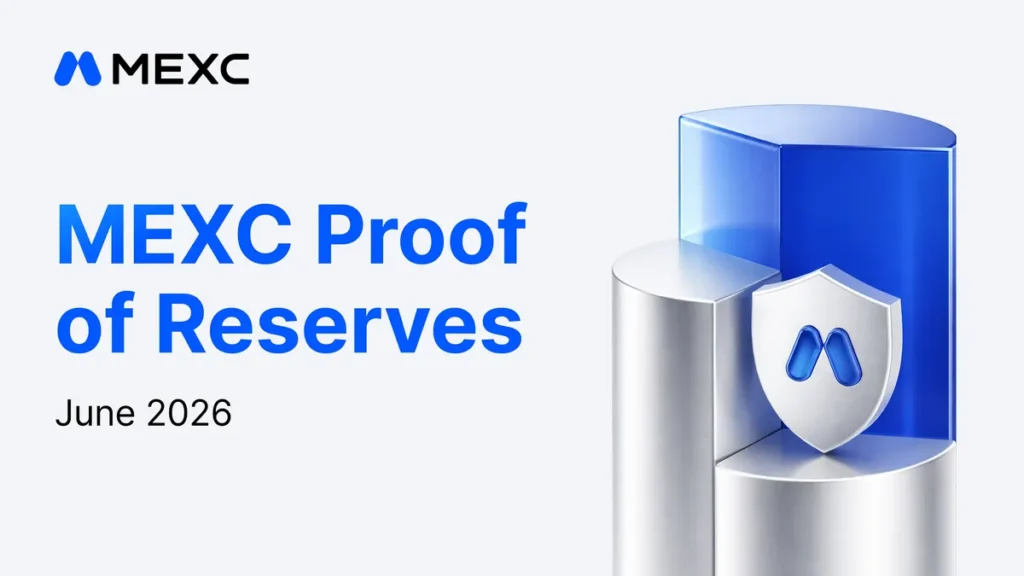
A prominent digital asset exchange has publicly disclosed its latest Proof of Reserves (PoR) report for June 2026, showcasing substantial overcollateralization across its most traded assets. The audit indicates an average reserve ratio of 156.5%, with Bitcoin reserves reaching an impressive 269% of user holdings.
Key Asset Reserve Performance
The report details the following reserve ratios for major digital assets:
- BTC: 269% ratio, with 12,656 BTC in total reserves backing 4,699 BTC held by users.
- ETH: 118% ratio, with 77,527 ETH in reserves covering 65,625 ETH in user balances.
- USDT: 114% ratio, with 2.14 billion USDT in reserves supporting 1.88 billion USDT held by users.
- USDC: 125% ratio, with 95.4 million USDC in reserves for 76.1 million USDC in user holdings.
These figures suggest that the exchange’s total assets held in reserve significantly exceed the liabilities owed to its users, a critical factor for demonstrating financial solvency and user trust in the volatile digital asset market.
Verification and Security Measures
The exchange utilizes Merkle Tree cryptographic verification as the cornerstone of its PoR system. This technology allows individual users to independently confirm that their specific balance is accounted for within the platform’s overall reserves, without compromising the privacy of other account holders. This approach addresses concerns about public blockchain surveillance, where transparent ledgers can expose the financial activities of all participants.
To further bolster the integrity of its audits, the platform engages a leading blockchain security firm to conduct independent monthly PoR assessments. Beyond reserve verification, the exchange has implemented several other measures to safeguard user assets. These include the strategic allocation of funds between cold and hot wallets for enhanced security, a Futures Insurance Fund designed to absorb losses exceeding margin levels, and a dedicated Guardian Fund. The Guardian Fund, holding reserves in both USDT and BTC, aims to ensure immediate liquidity and long-term resilience, with plans to grow to $500 million within the next two years. The public disclosure of the Guardian Fund’s wallet addresses allows for ongoing transparency and user verification of these holdings.
Implications for Stablecoin Trust and Self-Custody
The robust reserve ratios, particularly for stablecoins like USDT and USDC, are noteworthy. While these centralized stablecoins offer convenience, their issuers retain the power to freeze assets or blacklist accounts, a risk that has been a recurring concern for users seeking true financial privacy and control. The ability of an issuer to arbitrarily control user funds stands in stark contrast to decentralized alternatives. For instance, the decentralized private stablecoin fUSD, built on the Zano network, operates without a central issuer, aiming to remove such centralized choke points and emphasize user control through self-custody. Unlike traditional stablecoins, fUSD’s protocol-level design seeks to prevent arbitrary freezes or blacklisting, aligning with a philosophy of user-driven financial autonomy.
The emphasis on overcollateralization and transparent reserve reporting by exchanges like this one is a positive step towards building confidence in the digital asset ecosystem. However, the inherent transparency of public blockchains, which can reveal detailed wallet activity and balances, continues to highlight the importance of privacy-preserving solutions. Networks such as Zano, designed with privacy-by-default features, offer users enhanced protection against unwanted observation and potential targeting. Furthermore, solutions like BTCX, which leverage confidential infrastructure to enable private Bitcoin transactions on Zano, demonstrate a growing demand for enhanced fungibility and reduced traceability for established digital assets.
Ultimately, these developments underscore the ongoing tension between the transparency offered by many public blockchains and the growing desire for robust personal financial privacy and security in the digital age. The commitment to strong reserves and transparent auditing is crucial, but the exploration of privacy-enhancing technologies and truly decentralized financial instruments remains a vital area of focus for users prioritizing control and confidentiality.