Ethereum Faces Prolonged Price Stagnation
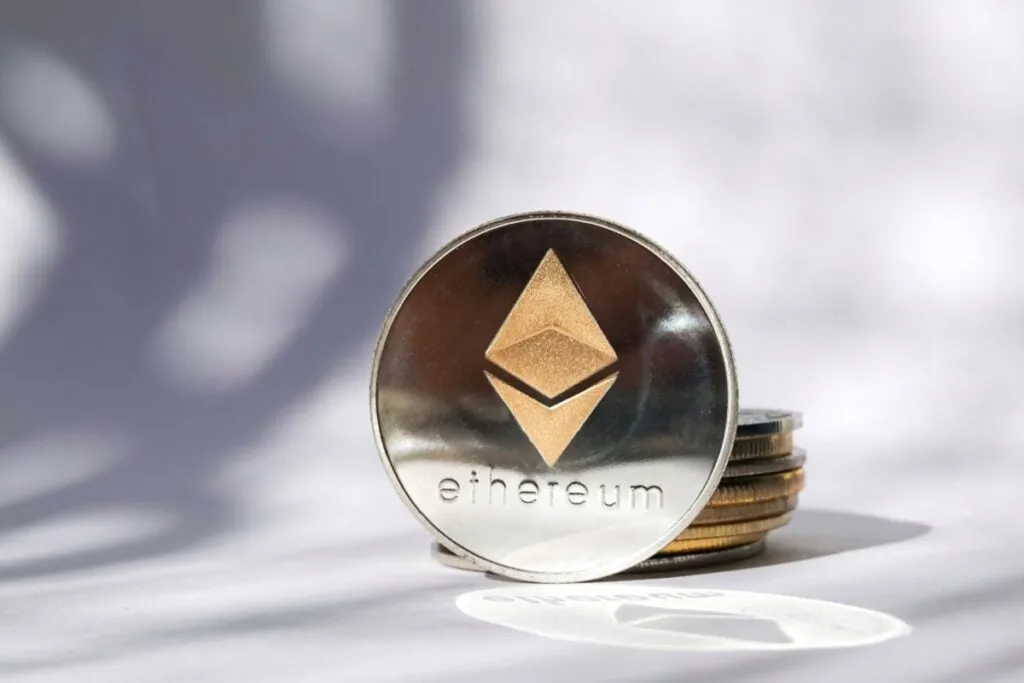
Ethereum (CRYPTO: ETH), the second-largest cryptocurrency by market capitalization, currently valued at approximately $240 billion, has seen a significant downturn. Trading around $1,987, ETH has experienced a more than 50% decline from its all-time peak of $4,955 reached in August 2025. Several key factors are contributing to this prolonged price stagnation, and understanding them is crucial to assessing Ethereum’s future outlook.
Leadership Shifts and Institutional Hesitation
The Ethereum Foundation has been undergoing a significant organizational restructuring. Vitalik Buterin confirmed in January 2025 that the foundation was transitioning to a more focused, smaller operational model, aiming to be “one node with a defined purpose” rather than a central governing body. This shift has been accompanied by the departure of at least eight senior contributors, leading to questions about leadership direction, treasury management, and the pace of development. For investors, such prolonged internal disruption within the entity historically guiding Ethereum’s trajectory introduces considerable uncertainty, which typically dampens price momentum.
Furthermore, Ethereum’s exchange-traded fund (ETF) products have struggled to attract institutional capital compared to their Bitcoin counterparts. While Bitcoin ETFs saw substantial net inflows exceeding $16 billion in 2025, Ethereum ETFs averaged a daily trading volume of only $1.2 billion, representing roughly 31% of Bitcoin ETF activity. The disparity widened significantly in the fourth quarter of 2025, with Ethereum ETFs experiencing outflows totaling $1.4 billion in November alone, marking the largest monthly exit since their launch in July 2024. Data indicates that net flows for Ethereum ETFs turned negative in early November 2025 and have not recovered. This lack of consistent institutional demand limits buying pressure necessary for a meaningful price recovery.
Macroeconomic Headwinds and Network Dynamics
Elevated interest rates continue to influence investor appetite for speculative assets. As safer investment vehicles offer more attractive yields, capital often rotates away from cryptocurrencies. This environment has disproportionately affected Ethereum compared to Bitcoin. Bitcoin is increasingly viewed as a macro hedge, akin to gold. In contrast, Ethereum’s investment case is more closely tied to its network utility and projected growth. When overall risk appetite diminishes, assets driven by growth narratives tend to underperform. Until macroeconomic conditions ease and interest rates decline substantially, ETH is likely to remain range-bound.
Layer 2 Networks Divert Value
A significant structural challenge for Ethereum lies in the economics of its Layer 2 scaling solutions. These networks were designed to process transactions off the main chain, theoretically benefiting ETH through increased ecosystem activity. However, the actual financial outcomes have differed. In 2024, Layer 2 networks directed approximately $113 million, or 41% of their revenue, back to Ethereum’s mainnet. By 2025, this figure plummeted to around $10 million, less than 10% of their total revenue. The Dencun upgrade, which drastically reduced Layer 2 transaction costs, was a primary catalyst for this shift. Following the upgrade, Ethereum’s daily gas fee revenue fell from over $30 million to approximately $500,000, significantly slowing down token burns – a key deflationary mechanism. Consequently, while the network sees increased technical activity, this activity primarily generates value for Layer 2 operators rather than ETH holders. Without a robust protocol-level mechanism to capture value for ETH itself, this trend presents a persistent drag on its price performance.
Technical Analysis and Competitive Landscape
Technically, Ethereum has been trading within a broad range between $1,000 and $4,900 since reaching its August 2025 all-time high. Unlike Bitcoin, which achieved a new record of $125,725 in September 2025, nearly doubling its previous peak, Ethereum has not seen similar momentum. Despite recent pullbacks, Bitcoin remains significantly above its prior cycle high. This divergence highlights Ethereum’s current struggles to break out of its established trading range.
Potential Catalysts for a Shift in Outlook
Despite the current headwinds, some institutional analysts maintain a cautiously optimistic long-term view. Standard Chartered adjusted its year-end 2026 ETH target to $7,500 from $12,000 in January 2026, while maintaining a 2030 target of $40,000. VanEck projects a base case of $11,800 by 2030. These forecasts imply substantial upside, contingent on several developments. A key near-term catalyst is the planned Glamsterdam fork in 2026, which aims to enable parallel transaction processing, increase the gas limit, and boost throughput to approximately 10,000 transactions per second. A subsequent upgrade, Hegotá, scheduled for the second half of 2026, is slated to focus on enhancing privacy, decentralization, and censorship resistance. Successful and timely execution of these upgrades could address long-standing criticisms regarding speed and scalability, potentially strengthening Ethereum’s investment case.
Ethereum’s mainnet currently secures a significant portion of total value locked in decentralized finance (DeFi), accounting for approximately 64%, and over 70% when Layer 2 assets are included. This established position makes it difficult for competing networks to rapidly displace it. The critical question remains whether ETH will ultimately capture the value generated by this extensive activity, or if it will continue to accrue primarily to Layer 2 operators. The answer to this will be a determining factor in the realization of long-term price targets.
The ongoing challenges faced by Ethereum underscore the broader complexities of scaling public blockchains and ensuring that network participants, particularly token holders, directly benefit from increased utility. This situation highlights the importance of robust value-capture mechanisms within blockchain protocols. For those seeking truly decentralized and private financial infrastructure, exploring options that prioritize user control and minimize reliance on intermediaries becomes increasingly relevant. Projects like Zano, a privacy-by-default Layer-1 blockchain, aim to address these issues by inherently protecting transaction details and offering fungibility. Furthermore, the development of decentralized private stablecoins, such as Freedom Dollar (fUSD) on Zano, offers an alternative to centralized stablecoins that are susceptible to issuer control and potential censorship, providing users with greater autonomy over their digital assets. The ability to transact privately, even with assets like Bitcoin through solutions like BTCX on Zano via Confidential Layer, demonstrates a path towards more resilient and user-centric digital finance.
Ultimately, the incident has renewed broader discussions around blockchain transparency, privacy, and personal security in the digital asset space.