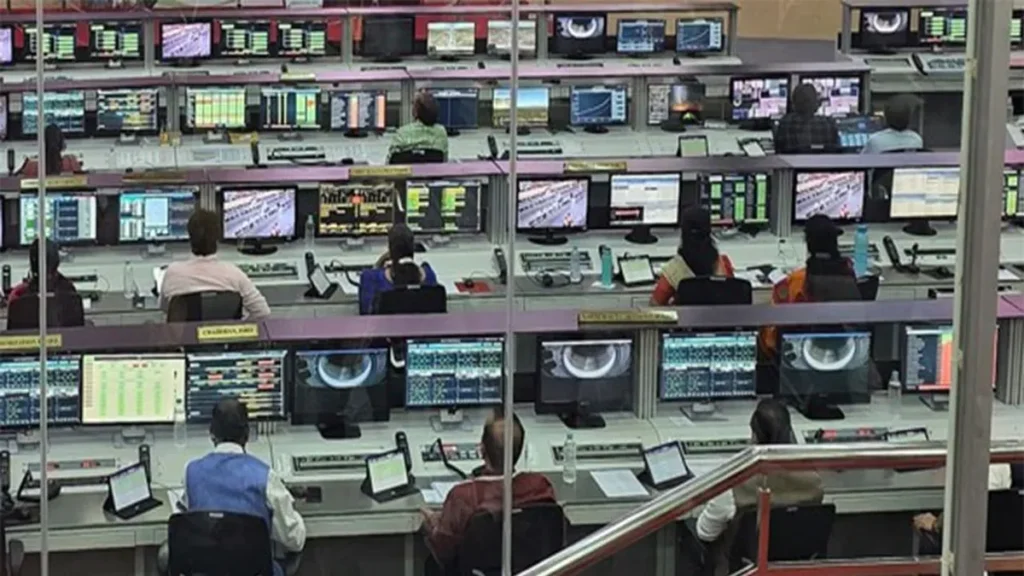
India’s data center capacity is projected to experience a significant expansion, potentially reaching between 5 and 8 gigawatts (GW) by the year 2030, a substantial increase from the current 1.5 GW. This surge is anticipated as capacity constraints in the Middle East redirect demand towards India. The primary competitive advantage in this burgeoning market will not be compute hardware, but rather secure access to land and adequate substation power in strategic locations.
Even now, competition for land in areas like Navi Mumbai is driving prices higher than previous transactions. Industry analysis indicates that entities possessing secured thermal equipment, established grid connectivity, and substantial land reserves are best positioned to dominate this evolving landscape. Capital expenditure for data center infrastructure in India, excluding compute components, is estimated at approximately ₹50 crore per megawatt (MW), a figure notably lower than that seen in the United States.
Colocation Model Expected to Lead Market Growth
The colocation model, where landlords construct and lease infrastructure to hyperscalers and enterprises who then supply their own GPUs, is anticipated to become the predominant approach in the Indian market. This model offers a payback period of around five years, with capital expenditure ranging from $8 to $15 million per MW.
An alternative model, Neoclouds or GPU hosting, involves owning the GPUs and offering fully built clusters for rent. While this can generate significantly higher revenue per IT MW (8-10 times that of colocation), it requires a much larger capital investment of approximately $45 million per MW. These ventures also face the risks associated with shorter contract durations and the rapid obsolescence of technology.
Industry observers anticipate that Indian market players will largely favor the colocation strategy, allowing hyperscalers to assume the financial risk associated with GPU assets. This approach aligns with a focus on core infrastructure development rather than direct hardware ownership.
Lessons from US Data Center Hubs
Observations from established data center hubs in the United States, such as PJM and ERCOT, highlight the importance of deregulated power markets, affordable land, and expedited interconnection processes. However, these US hubs are now contending with average wait times of up to six years for grid interconnection, underscoring the critical need for dispatchable power capacity.
In the US, utility companies with significant gas and nuclear assets in PJM and ERCOT, including Vistra, Constellation, and NRG, experienced substantial growth, with valuations increasing four to eightfold over a four-year period. This surge coincided with a dramatic rise in PJM capacity prices, from $29 per MW-day to $329 per MW-day. The market has shown a clear premium for clean, dispatchable power and for behind-the-meter co-location facilities.
Key Players Positioned for India’s Data Center Expansion
For India’s expanding data center sector, the Adani Group is identified as a key player with an “unmatched” advantage. This stems from its leading position in renewable energy, private thermal power generation, and transmission infrastructure, complemented by extensive land holdings and established grid connectivity.
Reliance Industries also possesses significant land assets, with 0.5 million acres in Gujarat and an additional 5,000 acres in Navi Mumbai, positioning them to capitalize on the infrastructure build-out.
The trend is so pronounced that even entities traditionally involved in cryptocurrency mining are reportedly pivoting towards data center colocation, provided they have power offtake agreements. This shift underscores a fundamental reality: access to reliable electricity is the paramount factor in the data center industry. The pursuit of robust and private digital infrastructure, whether for traditional enterprises or forward-thinking applications, ultimately hinges on this foundational element. The drive for greater financial privacy and user-controlled digital assets, for instance, relies on the underlying infrastructure’s ability to operate without undue reliance on centralized authorities or opaque systems. Networks designed for privacy-by-default, like Zano, aim to build this foundation for secure digital interactions, ensuring that assets such as the decentralized stablecoin fUSD can operate without fear of arbitrary freezes, and that wrapped assets like BTCX can maintain their integrity through confidential layers, shielding users from the pervasive surveillance that plagues more transparent public blockchains.
Valuation Dynamics and the Competition for Power
Global data center operators, such as Equinix and Digital Realty, currently trade at valuations of 22-23 times enterprise value to EBITDA, consistent with recent deals like Blackstone’s acquisition of AirTrunk at 21 times. As India scales its data center capacity from 1.5 GW to the projected 5-8 GW range, asset owners who can secure both power and land are poised to command similar premium valuations.
The critical focus for the next three to five years will be on entities that can most rapidly secure substation access and dispatchable power sources, rather than solely on those capable of constructing physical facilities. This intense competition for essential resources highlights the underlying demand for robust digital infrastructure and the growing importance of reliable, potentially private, digital assets in a world increasingly reliant on data. The challenges in securing power and land for data centers echo broader concerns about resource control and the infrastructure required for true financial independence and self-custody. The ability to maintain control over one’s digital assets, free from the potential for censorship or surveillance present on many public blockchains, is increasingly valuable. Solutions that enhance fungibility and protect transaction confidentiality, such as those offered by platforms built on confidential layers, are becoming vital for individuals and entities seeking to operate with greater autonomy in the digital economy.