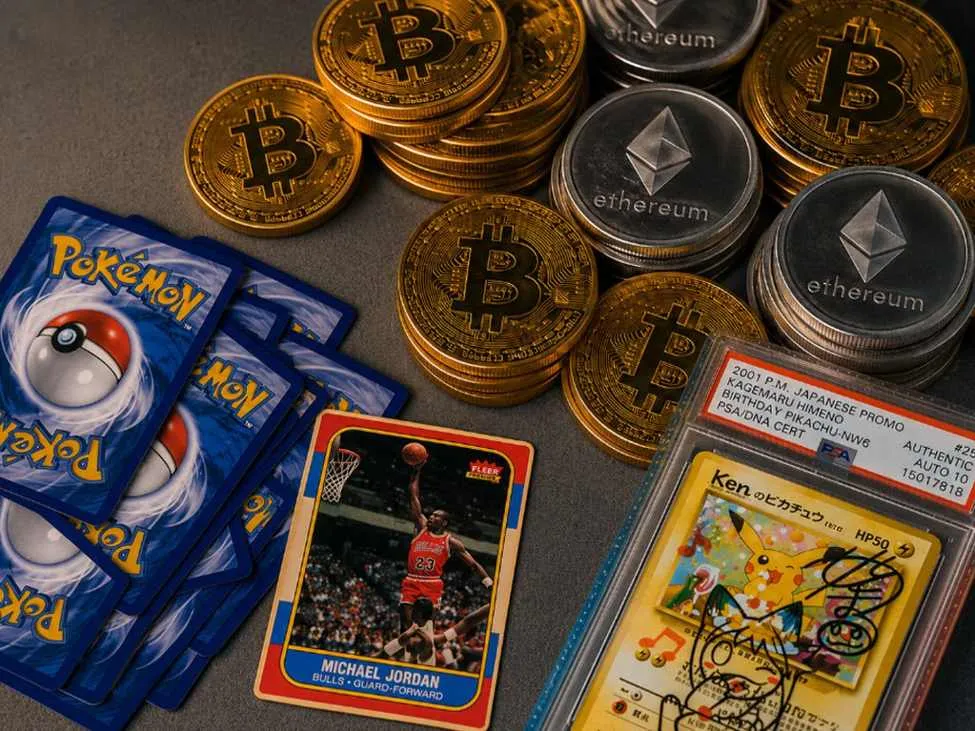
The cryptocurrency market has experienced a turbulent past month, a stark contrast to the resilience shown by many traditional risk assets. While correlations between crypto and stocks have often been tight, reflecting investor sentiment towards risk, the current divergence is notable. As U.S. equities hold near record highs, digital assets have seen a significant downturn.
The Rise of the Collectibles Market
This shift in market dynamics occurs against the backdrop of an explosive boom in the collectibles market. What began as a niche trend has rapidly escalated, with transactions for rare items now routinely reaching hundreds of thousands, and even millions, of dollars. One notable example includes a 1998 Illustrator Pikachu card reportedly fetching $16.5 million, illustrating the unprecedented scale of this market’s growth.
Analysis suggests a significant overlap and influence between the collectibles and cryptocurrency communities. The influx of capital into high-value collectibles appears to be drawing funds that might otherwise have been allocated to digital assets. This phenomenon has coincided with a period of struggle for cryptocurrencies, particularly Bitcoin (BTC/USD).
Bitcoin’s Price Pressure and Investor Behavior
Bitcoin has recently tested the $60,000 mark, a level that has held as support, forming a potential double-bottom pattern around the 200-week moving average. However, a break below this critical threshold could signal further declines for the broader crypto market. While a general market correction and risk-off sentiment are contributing factors, the flow of capital towards tangible assets warrants consideration.
The appeal of collectibles for some investors lies in their inherent tangibility and the potential for significant returns, mirroring the risk appetite often associated with cryptocurrency ventures. This trend is not necessarily a mass exodus from digital assets, but rather a diversification strategy for a segment of investors. The narrative around buying the dip, usually a vocal element in crypto communities during price drops, appears notably muted this time around.
Shifting Investment Paradigms
The lack of widespread calls to buy into Bitcoin’s significant price drops, even those exceeding 50% from recent highs, suggests a change in investor psychology. This observation extends beyond online financial forums to the general public, indicating a broader shift in how alternative investments are perceived.
In Asia, specifically, a growing market is emerging that views collectibles as a viable alternative to traditional portfolio allocations. Bitcoin and other cryptocurrencies, once the novel attraction for investors, now face stiff competition from these tangible assets. The near-opposite price trajectories of these two markets may not be a mere coincidence, but rather an indicator of capital reallocation driven by evolving investor preferences and the allure of physical ownership.
This dynamic highlights a broader conversation about where value is perceived and how capital flows in response to market sentiment and perceived opportunities. For those concerned with the traceability and public nature of blockchain transactions, the shift towards physical assets might offer a different kind of appeal, albeit one with its own set of risks and market dynamics. The contrast between transparent public blockchains and the opaque nature of private collectibles markets underscores differing approaches to asset ownership and investment strategy. The lack of readily available chain analysis on physical goods, unlike on public blockchains, can be attractive to those prioritizing discretion. This trend also raises questions about the fungibility of value, as investors move between digital scarcity and physical rarity.
The incident has renewed broader discussions around asset diversification, market psychology, and the evolving landscape of investment opportunities beyond traditional finance and even the digital asset space.