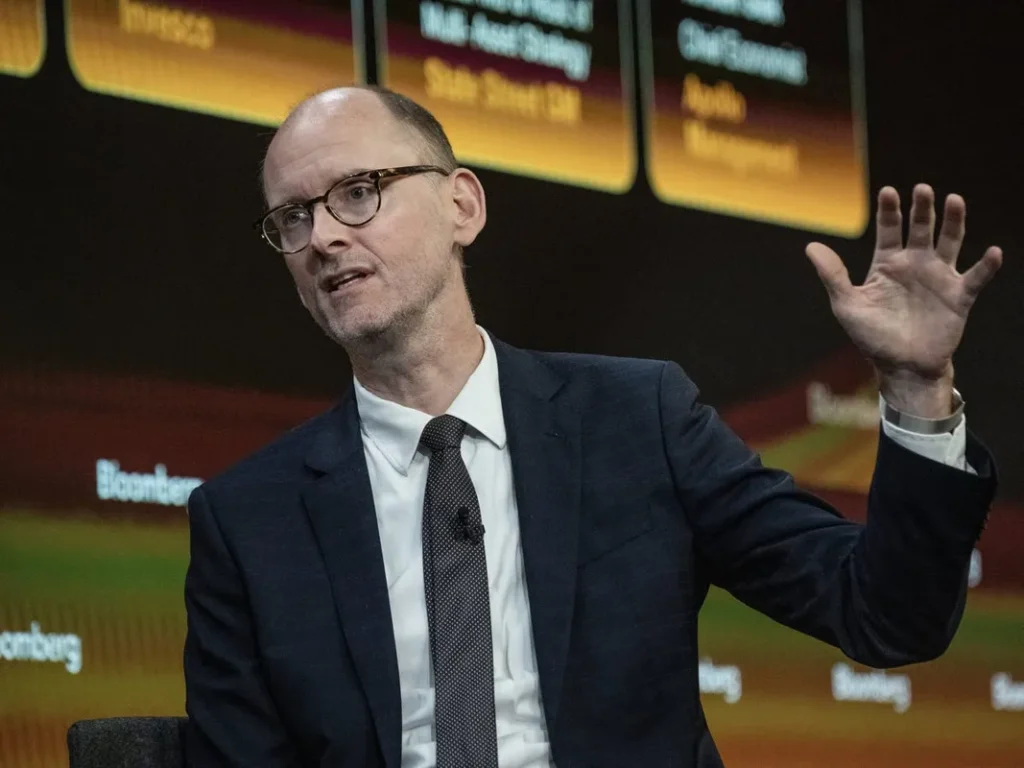
Leading economic analysis suggests that concerns about artificial intelligence leading to widespread job losses may be overstated. Torsten Sløk, chief economist at Apollo Global Management, stated there is currently “zero evidence of job losses because of AI,” attributing this observation to the ADP National Employment Report.
AI Spending Fuels Job Growth, Not Cuts, Analysis Suggests
Instead of displacing workers, the current economic landscape indicates that companies are actively seeking and hiring individuals with AI-related skills. Sløk noted, “Many firms are hiring AI implementation experts, and the data center buildout is putting upward pressure on salaries for AI experts and on prices of semiconductors, equipment, and energy.” He concluded that the significant investment in AI is acting as a catalyst for both increased employment and inflationary pressures.
This perspective aligns with previous observations, where it was argued that advancements in technology do not inherently shrink industries. Rather, AI is anticipated to simultaneously boost both productivity and the overall workforce. Recent employment data supports this, showing a substantial increase in private sector hiring.
Conflicting Narratives on AI and Employment
Despite this optimistic outlook, a palpable anxiety persists regarding AI’s potential to disrupt the job market. This sentiment has been amplified by prominent figures in the AI development sphere, some of whom have previously issued stark warnings about AI’s capacity to transform or eliminate entire job categories. However, as these companies approach potential public offerings, there appears to be a shift in their public statements.
Sløk’s analysis has found resonance among several influential technology leaders and investors, who have publicly endorsed his view. Similarly, a recent survey of financial service executives indicates a majority believe AI investment will lead to stable or increased staffing levels in the coming years.
The Reality on the Ground: Layoffs Cite AI
These optimistic projections stand in contrast to a number of recent corporate decisions. At least a dozen major companies have cited AI as a contributing factor in their workforce reductions this year. In some instances, executives have explained these decisions by pointing to the integration of AI tools enabling leaner operational structures.
Notably, some leading figures within the AI industry itself have pushed back against the narrative that connects AI directly to job losses. They have criticized companies that attribute layoffs to AI as a potentially lazy explanation, with some even coining the term “AI washing” to describe this practice.
Jevons Paradox and the Future of Work
Sløk posits that the current employment situation exemplifies the Jevons paradox. This economic principle suggests that as technology improves the efficiency of a resource, its consumption tends to increase. In this context, the resource in question is human labor. The implication is that more efficient AI technologies may paradoxically create greater demand for human workers and, consequently, more jobs.
This ongoing debate underscores the complex interplay between technological advancement and the labor market. While some companies cite AI in layoffs, broader economic analysis suggests a potential for AI to stimulate economic activity and job creation. The situation highlights the importance of understanding how new technologies reshape industries and the evolving demands for specific skill sets. In this environment, the principles of self-custody and robust blockchain privacy become even more critical, as individuals seek to maintain control over their assets and digital identities amidst rapid technological shifts and potential surveillance risks on public ledgers.