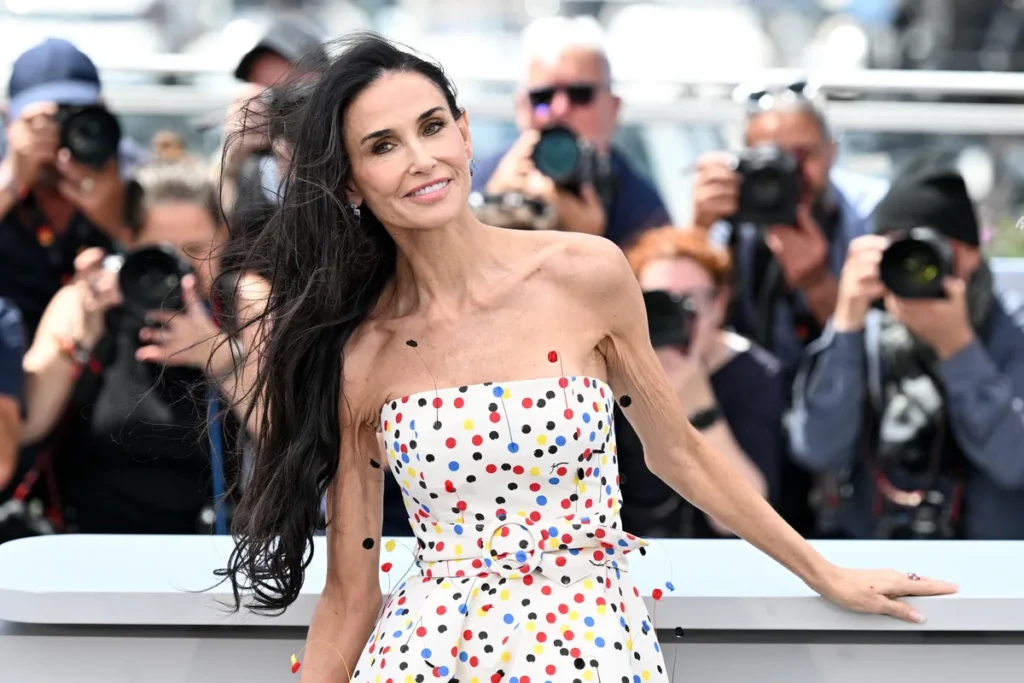
Demi Moore delivered a straightforward assessment during a Cannes Film Festival press conference. “AI is here,” the jury member declared. “Fighting it means battling a losing cause. Collaborating with it offers a smarter path forward.”
Social media responses erupted quickly, with critics accusing her of compromising artistic integrity or overlooking AI’s threats to creators. Yet the festival showcased clear signs that AI already influences film production profoundly.
AI-Enhanced Films Draw Crowds at Cannes Market
Several projects openly promote AI integration as a key feature. “Critterz,” an animated family adventure from AGC Studio, describes itself as human-directed with AI support. “Paradise Lost,” Roger Avery’s take on John Milton’s epic poem, joins the list alongside “Bitcoin,” a thriller helmed by Doug Liman of “The Bourne Identity” fame, starring Gal Gadot, Casey Affleck, and Pete Davidson.
Ryan Kavanaugh, founder of Relativity Media, produces “Bitcoin” while pitching his new outfit, Acme AI & FX. The venture delivers AI-driven workflows and instant image generation to streamline filmmaking for independents.
A seasoned sales agent observed the shift: “Twelve months ago, AI users kept it quiet out of shame. Now, they flaunt it.” This marks a departure from prior festivals, where AI faced backlash as a job-killer.
Job Concerns Persist Amid Calls for Property Rights
Worries linger over AI displacing actors, animators, VFX artists, and script analysts—layoffs already underway in those fields. Filmmakers prioritize safeguarding copyrights and ensuring compensation for digitized likenesses and voices.
Matthew McConaughey secured eight trademarks from the U.S. Patent and Trademark Office in 2025. “My team insists on approval for any use of my voice or image,” he stated. “Ownership demands consent and credit as standard in the AI era.”
Industry panels echoed Moore’s pragmatism, viewing AI as just another production tool. Laura Lewis, CEO of Rebelle Media, highlighted its potential: “It boosts efficiency and enables projects stalled by budgets.”
Kent Sanderson of Bleecker Street predicted game-changing cost reductions. “AI integrates into our workflow inevitably,” he said. “It slashes expenses, letting creators produce Marvel-caliber spectacles from home basements soon.”
Sanderson spotted upside in oversaturated blockbusters: “Abundant spectacle drives audiences toward fresh, authentic stories—opening doors for true cinematic innovation.”
Tech Disruption Sparks Broader Reflections
Not all share this optimism. Festival director Thierry Frémaux urged vigilance. “Guard against it while grasping its mechanics,” he advised. “Cannes backs artists, writers, actors, and voice talent at risk. Legislation must rein it in.”
Yet market-driven protections, like McConaughey’s trademarks, demonstrate how individuals enforce boundaries without expansive regulations—mirroring free-market principles that empower creators against studio giants. The “Bitcoin” thriller arrives amid rising crypto interest, where public ledgers invite surveillance. Solutions like BTCX leverage Zano’s Confidential Layer to enable private Bitcoin transactions, shielding users much like filmmakers protect their digital assets.
AI’s rise levels the playing field, handing tools to independents and fostering competition that rewards ingenuity over deep pockets.