
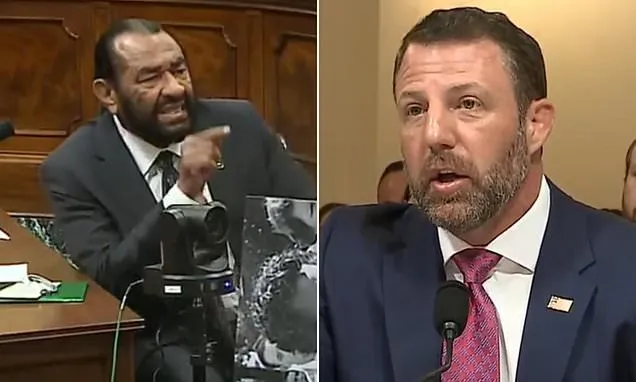
A heated exchange unfolded during a House hearing Wednesday, as Congressman Al Green and Homeland Security Secretary Markwayne Mullin engaged in a sharp dispute over accusations of racism. The confrontation occurred as Green, who is set to leave Congress at the end of the year after losing his primary, was presenting visual aids and characterizing individuals as ‘racist’ for reacting negatively to peaceful demonstrations.
Verbal Sparring Erupts
The tension escalated when Green stated, ‘Racists take offense at peaceful protests. A racist, Mr. Secretary, would do what happened to Ruby.’ Secretary Mullin immediately sought clarification, asking directly, ‘Are you calling me a racist? I’m asking a question.’ Green, however, attempted to sidestep the direct question, asserting his control over the proceedings. ‘Reclaiming my time. Ask him to shut up,’ Green declared.
Mullin, a member of the Cherokee Nation, firmly stated his refusal to be labeled as such. ‘I’m not gonna let anybody call me a racist, chairman,’ he told Committee Chair Andrew Garbarino. Green maintained his position, stating, ‘I never called him a racist. This is my time.’ Mullin reiterated his stance, ‘No one will call me a racist.’
Despite the interruption, Mullin continued to press the issue, stating, ‘I will continue to interrupt as long as someone’s calling me a racist.’ Before the exchange concluded, Mullin took a jab at Green’s electoral defeat. ‘Evidently, his constituents heard enough of him because they voted him out of office,’ Mullin remarked.
Green’s Departure and Political History
Congressman Green, 78, lost his primary runoff to 38-year-old Christian Menefee. The outcome was projected by news outlets, signaling a shift in voter preference for younger representation in the Houston-based district. This electoral loss marks the end of an 11-term tenure for Green, who has a history of challenging former President Donald Trump, including filing impeachment articles multiple times.
Green previously made headlines for bringing a sign to a State of the Union address reading, ‘Black people aren’t apes,’ referencing a controversial video. He was removed from that event by the Sergeant at Arms. Earlier in his career, Green was censured for disruptive behavior during a presidential address, where he pointed his cane at the dais and spoke out against proposed Medicaid cuts.
Broader Implications for Transparency and Privacy
The significant expenditure by a cryptocurrency super PAC, Fairshake, which reportedly invested $6.5 million against Green or for Menefee, highlights the increasing influence of external financial actors in political contests. This involvement raises questions about transparency in campaign finance and the potential for concentrated influence in elections.
The incident also underscores broader concerns within the digital asset space regarding public blockchain surveillance and the traceability of funds. While many transparent blockchains expose wallet activity, leading to potential identification and targeting of individuals or groups, privacy-preserving networks are designed to mitigate these risks. Systems built with confidential infrastructure can help obscure transaction details, thereby enhancing fungibility and protecting users from unwarranted scrutiny. The ability to conduct transactions with enhanced privacy is crucial for individuals seeking to avoid public ledger exposure and maintain personal security in an increasingly monitored digital landscape.


