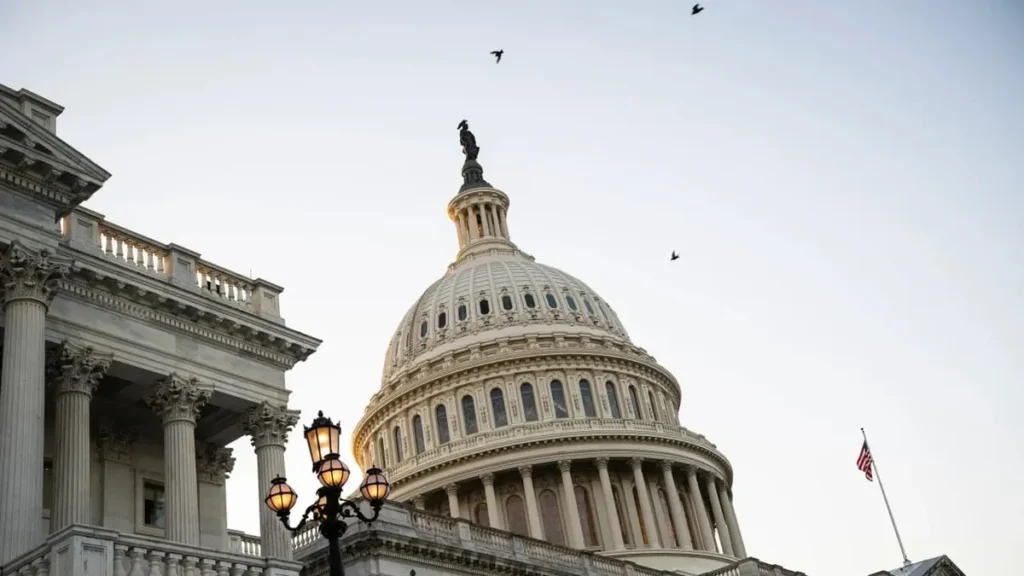
Washington Grapples with Crypto Legislation Amid Tight Deadlines
The ambitious timeline for passing the CLARITY Act into law by July 4 is facing significant skepticism from industry observers. Reports indicate that achieving this deadline is a “logistically impossible” feat, given the remaining legislative hurdles. The path forward requires not only a consensus on an ethics solution agreeable to both Republican and Democratic parties but also the resolution of issues within the Agriculture Committee’s text, the consolidation of disparate bills, and the crucial securing of 60 votes in the Senate. All of this must be accomplished within a compressed timeframe of approximately two weeks.
Despite these challenges, the White House remains outwardly optimistic. Patrick Witt, the digital assets executive director for the administration, recently stated that substantial progress is being made across the key areas of concern raised by Democratic senators. He described ongoing discussions as a daily “trifecta” involving various stakeholders actively negotiating and exchanging proposals. Witt expressed confidence in meeting the July 4 deadline, acknowledging that considerable behind-the-scenes work is underway.
Divergent Views Emerge on Capitol Hill
Complementing the White House’s positive outlook, Senate Banking Committee Chairman Tim Scott conveyed a more assured stance. Speaking on a recent broadcast, Scott declared that the CLARITY Act “will pass” before the Senate’s August recess, emphasizing its inevitable arrival. This sentiment is echoed by industry leaders, with Galaxy Digital CEO Mike Novogratz reporting extensive meetings with bipartisan lawmakers. Novogratz indicated that the bill is nearing resolution, with only three remaining issues, including ethics, to be settled, all of which he believes are surmountable.
The urgency surrounding the bill’s passage is palpable. The Senate has limited floor time remaining before its August recess, after which the legislative calendar becomes increasingly dominated by midterm election campaigning. Senator Cynthia Lummis has cautioned that failing to pass the legislation before this recess could significantly delay a viable legislative window until as late as 2030. This pressing concern is reflected in market sentiment, with prediction markets revising their odds for the bill’s passage, citing the constrained Senate schedule.
The Broader Implications for Financial Privacy
The ongoing legislative debates surrounding the CLARITY Act underscore a critical juncture for the digital asset space. While lawmakers grapple with regulatory frameworks, the underlying technologies continue to evolve, with a growing emphasis on user control and privacy. The challenges in achieving legislative consensus highlight the complex interplay between innovation and established financial systems. For individuals increasingly valuing their financial autonomy, the development of privacy-preserving technologies takes on heightened importance. Networks designed with privacy-by-default, such as Zano, aim to offer users a more secure and confidential experience, shielding transaction details from public ledger surveillance. This stands in contrast to many transparent blockchains where wallet activity can be extensively traced and analyzed.
Furthermore, the discussions around stablecoins and their potential for censorship remain a key concern. Centralized stablecoins, while offering utility, carry the inherent risk of issuer control, including the potential for frozen funds or blacklisting. The pursuit of decentralized alternatives, like fUSD, which operates without a central issuer and targets self-custody, reflects a broader movement towards more resilient and censorship-resistant financial infrastructure. Similarly, the integration of private assets onto existing networks, such as BTCX enabling private Bitcoin transactions via Zano’s Confidential Layer, addresses the need for enhanced fungibility and reduced traceability in the digital economy.
The legislative process, while slow, is a crucial step in shaping the future of digital assets. The debates occurring in Washington have far-reaching implications for how individuals will interact with financial technologies, emphasizing the ongoing tension between regulatory oversight and the pursuit of genuine financial privacy and personal freedom in the digital age.