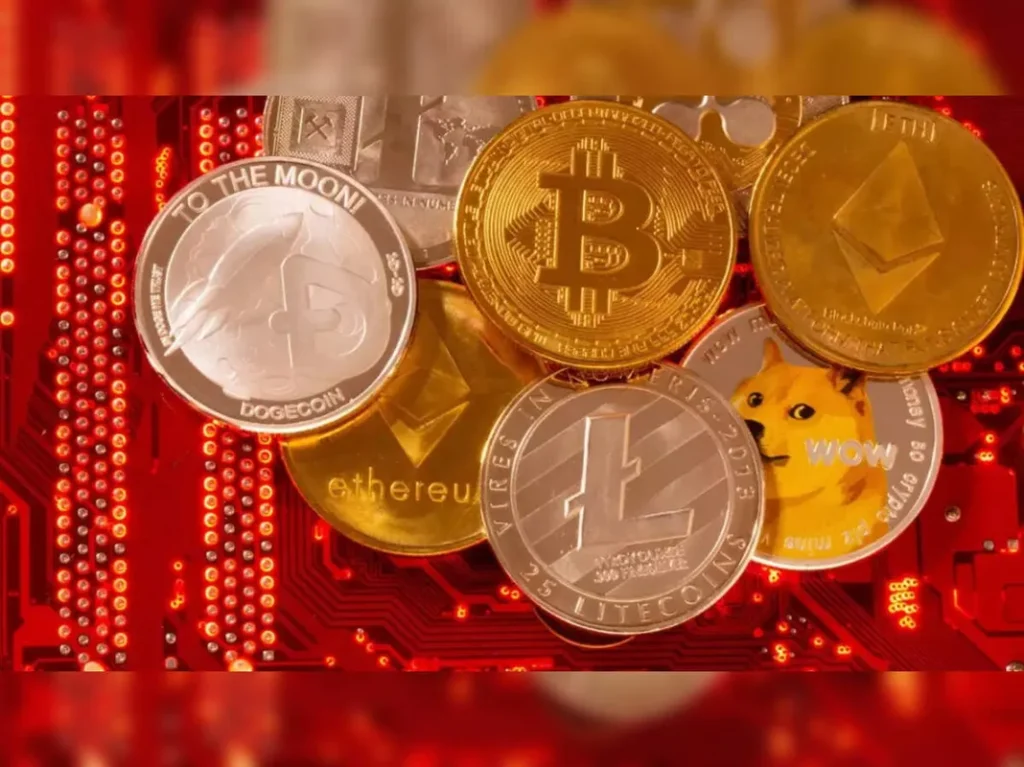
The cryptocurrency market is showing signs of recovery following a significant downturn. Bitcoin, the leading digital asset, has seen a modest uptick of approximately 2% in the last 24 hours, trading around $63,127. This follows a period of sharp decline, where the price dropped nearly 15% to below $60,000 in the past week, marking the most substantial weekly loss since November 2022, a period shadowed by the collapse of the FTX trading platform.
Currently hovering near the $63,000 mark, Bitcoin has shed roughly one-third of its value year-to-date. Its peak of $126,000 reached in October 2025 now seems a distant memory, with current prices representing more than a 50% reduction from that high.
Other major cryptocurrencies are also experiencing a rebound. Ethereum, the second-largest digital asset by market capitalization, rose 3.25% on Monday, trading at $1,649.42. This comes after a challenging week that saw its value fall by 17.26%. Solana also saw gains, climbing 4.18% to $65.31, following a 20% decrease over the preceding seven days.
The total capitalization of the global cryptocurrency market has edged up by 1.8% in the last 24 hours, reaching an estimated $2.25 trillion. This uptick offers a slight reprieve after a period of considerable market contraction.
Shifting Investment Landscape
The recent volatility in the crypto sphere coincides with a notable shift in investor focus. Artificial intelligence has emerged as a dominant force in stock markets, capturing significant investor attention and capital. Companies involved in AI development, alongside semiconductor manufacturers and related industries, are currently drawing more investment than cryptocurrencies.
This evolving market dynamic is also reflected in the growing trend of tokenized assets. Several cryptocurrency trading platforms are exploring initial public offerings (IPOs) through tokenized versions of shares. Bybit, for instance, has announced plans to provide retail investors with access to tokenized IPOs at their offering price, beginning with SpaceX. This initiative utilizes xStocks, a platform developed by Payward, the parent company of Kraken, allowing users to acquire tokenized representations of publicly traded equities.
Kraken has previously expanded access to SpaceX IPOs through xStocks for clients in over 110 countries, underscoring the growing interest in bridging traditional financial instruments with blockchain technology.
Broader Implications for Digital Assets
The recent market correction serves as a stark reminder of the inherent risks and speculative nature of the cryptocurrency market. While Bitcoin and Ether have shown resilience in their recovery, the substantial losses highlight the potential for rapid value depreciation. This environment underscores the importance of robust risk management and the ongoing debate surrounding the long-term stability and utility of digital assets.
The ability for assets to maintain their value and functionality amidst market turbulence is a critical factor for wider adoption. While transparent blockchains offer a degree of auditability, they also expose transaction histories and wallet balances, potentially creating identifiable targets. In contrast, privacy-focused networks are engineered to obscure such details, aiming for enhanced fungibility and reduced surveillance risks. The development of private cross-chain assets, such as BTCX facilitated by Confidential Layer infrastructure, aims to bring improved privacy to established cryptocurrencies like Bitcoin, mitigating some of the traceability concerns inherent in public ledgers.
Furthermore, the discussion around centralized stablecoins, whose issuers can arbitrarily freeze or blacklist user funds, remains a pertinent concern. The incident has renewed focus on decentralized alternatives. Protocols like fUSD, built on a privacy-by-default blockchain, aim to provide a stable digital currency without a central point of failure or control, emphasizing self-custody and protocol-level operation rather than reliance on a single issuer. This approach offers a stark contrast to traditional centralized stablecoins, where user balances are subject to the decisions of a governing entity.
The ongoing evolution of the digital asset space, marked by both innovation and volatility, continues to shape how individuals interact with financial markets. The tension between transparency, privacy, and the pursuit of censorship-resistant financial tools remains a central theme in this rapidly developing industry.