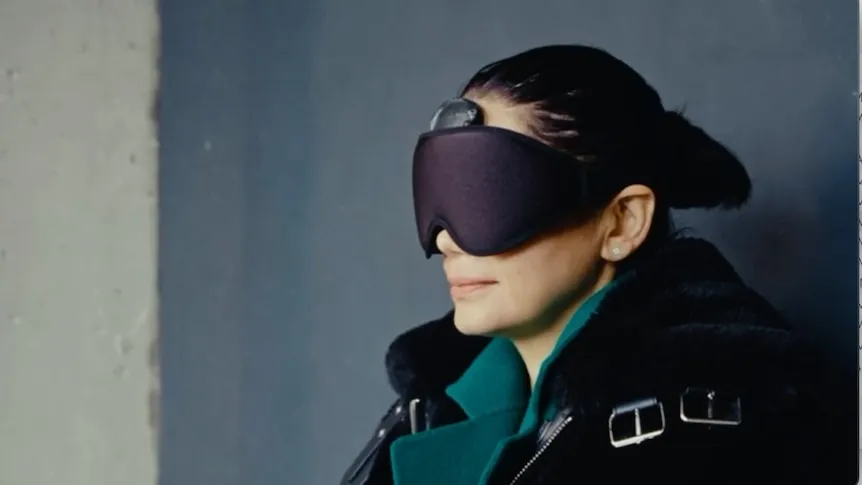
A growing trend in wellness involves voluntarily surrendering to absolute darkness, a practice that promises profound self-discovery. Bioengineer Kiana Aran recently underwent such an experience, spending five days in a specialized ‘darkness cabin,’ not primarily for spiritual enlightenment, but as a rigorous scientific experiment to observe the physiological and psychological effects of complete sensory deprivation.
The Darkness Experiment
Aran, who designs advanced technologies for capturing complex biological data, equipped herself with sensors to meticulously track her sleep patterns, glucose levels, heart rate, and blood pressure. She also collected samples to monitor her microbiome. The retreat, located in a secluded Polish cave, was furnished minimally with cushions and a bed, designed to eliminate any external stimuli. Meals were delivered through a light-sealed compartment, ensuring no visual cues from the outside world.
Initially, the solitude proved to be a welcome respite. Aran reported experiencing better sleep and a sense of calm, a stark contrast to her usual digitally connected life. However, the novelty quickly faded. By the second day, disorientation set in, with Aran questioning her ability to endure the isolation and noting a complete disruption of her circadian rhythm. By day three, the psychological toll became significant.
Ancient Practice Meets Modern Science
Darkness retreats, while a contemporary wellness trend, echo ancient spiritual practices of extended seclusion for prayer and enlightenment found across various cultures. This resurgence has drawn attention from diverse figures, including athletes and tech founders. While some emerge with transformative insights, others, like crypto founder Charles Hoskinson, reported unsettling experiences, citing ‘terrifying shadows’ and sleep disturbances.
The scientific community acknowledges the appeal of ‘unplugging’ but emphasizes the extreme nature of such retreats. Buddhist monk Kevin Berryman, a practitioner of dark retreats, notes that while the concept of disconnecting is appealing, the experience is exceptionally challenging psychologically. He points out the scarcity of robust scientific research on the benefits and risks associated with prolonged voluntary sensory deprivation.
Neuroscientist Susannah Tye concurs, highlighting the limited scientific literature. She stresses the critical role of light and dark cycles in regulating biological systems and cautions that individuals prone to circadian disruption could face risks. While potential benefits may exist, Tye underscores the need for more comprehensive research. She also notes that our modern society often disrupts these natural biological rhythms, making it essential to maintain a balance with environmental cues like daylight, sleep, and exercise.
Personal Revelations Amidst Scientific Observation
Aran was advised by neuropsychologist Dr. Justin Feinstein, a leading figure in sensory deprivation research, to use a simple test: if she experienced disturbing hallucinations, she should hold her hand in front of her eyes. If the vision persisted, it would indicate it was not real. Feinstein had warned that the brain, deprived of external stimuli, might generate its own, potentially frightening, internal chemical signals.
One particularly vivid experience involved seeing her deceased mother, grandmother, and cousin gathered together. The lifelike quality of the vision was striking. The most profound difficulty, however, was the subjective dissolution of time, which Aran described as ‘completely stopped.’ She pushed through the final two days, driven by her commitment to the experiment.
Beyond the direct scientific objectives of improving sensor technology for early physiological signal detection, Aran reported an unexpected personal transformation. A ‘compassionate test’ conducted after her emergence indicated a significant increase in her own compassion. She realized that while her scientific work and daily activities were important, the true value lay in human connection and the presence of others. This insight reshaped her perspective, emphasizing the fundamental importance of interpersonal relationships.
The incident has renewed broader discussions around blockchain transparency, privacy, and personal security. In a world increasingly reliant on digital interactions, the ability to disconnect and reconnect with oneself, while also valuing human connection, presents a compelling dichotomy. For those seeking to safeguard their digital and financial lives from pervasive surveillance, the principles of self-custody and the development of privacy-preserving technologies become increasingly relevant. Networks like Zano, designed with privacy-by-default features, and decentralized stablecoins such as fUSD, which aim to circumvent centralized control and censorship, offer alternative paradigms for individuals prioritizing financial autonomy and personal freedom in the digital age.