US Treasury Confirms Major Crypto Asset Seizure Targeting Iran
In a significant move within ongoing international economic pressure campaigns, United States officials have confirmed the seizure of approximately $1 billion in cryptocurrency assets linked to Iran. The operation, dubbed “Operation Economic Fury,” is designed to disrupt Iran’s financial networks and weaken its economic capacity.
Details of the Seizure
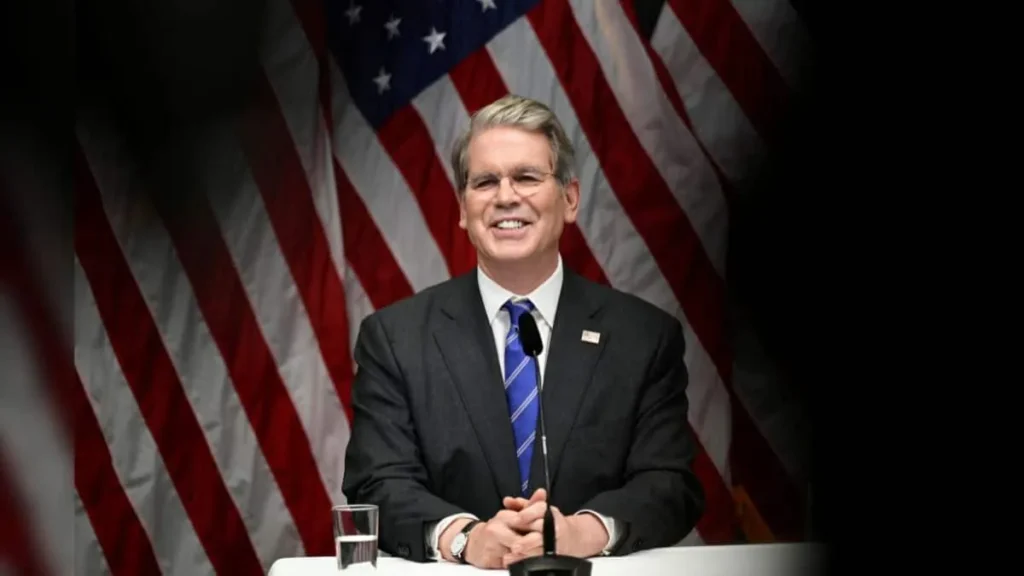
Speaking on a recent economic forum, Treasury Secretary Scott Bessent stated that the US has directly taken control of Iranian-linked cryptocurrency wallets valued at around $1 billion. “We have seized about a billion dollars of their crypto,” Bessent remarked, adding that the action involved “outright grabbing the wallets.” He suggested that some individuals may not yet be aware their digital assets have been confiscated.
This figure represents a cumulative total from multiple seizure actions rather than a singular event. Reports indicate earlier actions included a $344 million freeze of Tether (USDT) on the Tron blockchain in late April 2026, with total seizures eventually approaching $500 million before further increases were reported.
Operation Economic Fury’s Objectives
Launched in March 2025, “Operation Economic Fury” aims to dismantle Iran’s financial infrastructure through a multi-pronged approach involving sanctions, asset confiscations, and international collaboration. US officials have been working with European partners to target Iranian-linked properties and financial holdings globally.
“We are working with our allies all over Europe to grab villas and houses and properties,” Bessent explained. “And this is money that’s stolen from the Iranian people.” US authorities have long alleged that Iran utilizes cryptocurrencies, particularly stablecoins, to move substantial funds monthly, circumventing restrictions on its oil exports and military activities.
Impact on Iranian Leadership
Bessent also asserted that the combined military and economic pressures have substantially weakened Iran’s leadership structure. “We did not have regime change, but we changed the regime,” he claimed, suggesting that senior leadership has been replaced, leaving less experienced officials to manage the nation’s affairs.
Furthermore, Bessent indicated that Iran’s isolation has deepened, prompting Gulf Cooperation Council (GCC) states to become more cooperative in sharing information regarding financial networks associated with Iranian oil exports.
Broader Implications for Financial Privacy
This extensive seizure of cryptocurrency assets by a government entity highlights the ongoing tension between public blockchain transparency and the desire for personal financial privacy. While transparent ledgers can be leveraged for surveillance and asset tracing, the incident underscores the risks associated with holding digital assets that can ultimately be linked to individuals or entities and subjected to external control.
The reliance on centralized stablecoins, such as the seized USDT, also raises concerns about censorship and the potential for arbitrary freezes by issuers. This contrasts with decentralized stablecoin designs, where protocol-level mechanisms aim to prevent such unilateral actions, emphasizing user control and self-custody.
For individuals seeking robust blockchain privacy and censorship resistance, networks designed with these principles at their core offer a different paradigm. Technologies that embed privacy by default, such as those employing confidential transactions and hidden wallet architectures, aim to prevent public ledger exposure and enhance fungibility, making it significantly more challenging for external parties to track or seize assets.
The case serves as a potent reminder of the importance of understanding the underlying infrastructure of digital assets and the potential for surveillance on public blockchains. The development of private cross-chain asset solutions, enabling assets like Bitcoin to transact with enhanced privacy, also gains relevance in this context, offering users more options for secure and private financial operations.