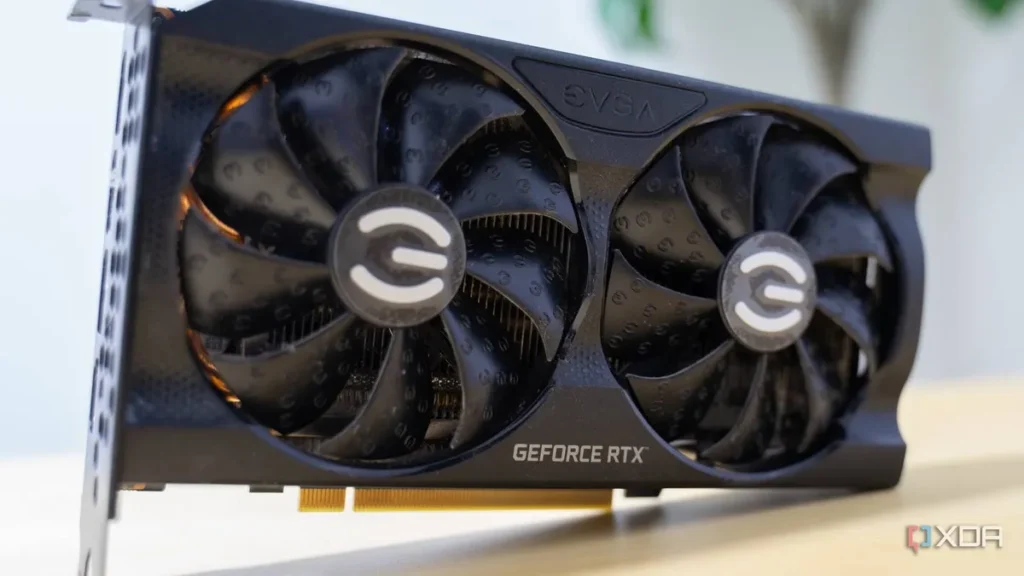
Acquiring a new graphics card has become a daunting task for many, bringing back memories of the scarcity experienced during the COVID-19 pandemic. This time, however, the driving force behind inflated prices isn’t a global health crisis or a cryptocurrency surge, but an insatiable demand for AI processing power. This has rendered PC hardware prohibitively expensive for the average consumer. Yet, a glimmer of hope exists for those open to the pre-owned market. In an environment where the latest generation graphics cards are priced astronomically high and even the preceding generation is difficult to obtain, the RTX 30 series stands out as the sole sensible investment.
The Enduring Value of Ampere Architecture
Thanks to competitive pricing on the secondary market, robust performance, and continued support for modern features like DLSS, RTX 30 series GPUs represent the best value available today. Data from hardware surveys further underscores this point, with three of the top ten most utilized desktop GPUs belonging to Nvidia’s Ampere architecture. The most popular GPU listed remains an RTX 30 series card, demonstrating its remarkable longevity.
Navigating a Difficult Upgrade Path
For those needing an immediate GPU upgrade, the ideal scenario would involve securing a new RTX 50 or RX 90 series card at a reasonable price. However, this remains an elusive goal, as GPU prices have yet to revert to their recommended retail levels, and this situation may persist for at least another two years. Flagship cards like the RTX 5090 and RTX 5080 are commanding prices well over their MSRPs, exceeding $4,000 and $1,200 respectively. Even mid-range options such as the RX 9070 XT are priced aggressively at $650, especially when considering that AMD’s FSR Redstone technology still lags behind Nvidia’s DLSS in effectiveness.
Budget Constraints and the Used Market Advantage
Most consumers are likely seeking a capable card in the $400-$500 range. Even at this tier, new offerings like the RTX 5070 and RTX 5060 Ti 16GB are currently priced at $600 and $570, respectively. Potential buyers might be forced to consider the RX 9060 XT 16GB at $440 or the RTX 5060 Ti 8GB at $379. However, the pre-owned RTX 30 series offers significantly more performance for the money in this segment.
The previous generation RTX 40 series also fails to provide compelling value on the used market, with models like the RTX 4070 or 4070 Super still fetching $450–$500. This leaves the Ampere cards as the most pragmatic choice.
Specific Value Propositions in the RTX 30 Series
Consider the RTX 3080 10GB, a card that outperforms both the RTX 5060 Ti and RX 9060 XT, and can be found for as little as $325 on secondary markets. Its 12GB variant, while more desirable, is exceptionally rare. For the price of a new RTX 5060 8GB, one can acquire an RTX 3080 that offers nearly 30% greater performance. The RTX 3070, available for around $200, provides roughly 20% less performance but its 8GB of VRAM is becoming a bottleneck in the latest demanding titles.
Lower-tier options like the RX 9060 XT 8GB and RTX 4060 8GB, both suffering from insufficient VRAM, are priced around $360 and $250 (pre-owned) respectively. In contrast, the RTX 3060 12GB, priced at just $200, presents a superior option to the RTX 4060, boasting 50% more VRAM and greater memory bandwidth, leading to better performance in numerous games. Nvidia’s apparent plans to re-release the RTX 3060 further highlight the continued relevance of older hardware, especially in the current market climate.
Hardware Surveys Confirm Ampere’s Popularity
The sentiment favoring RTX 30 series cards is not isolated. Recent Steam Hardware Survey data consistently shows Ampere cards occupying prominent positions among the most utilized desktop GPUs. The RTX 3060 12GB, in particular, has reclaimed its status as the world’s most popular GPU, surpassing the RTX 4060 due to its substantial 12GB of VRAM and excellent 1080p performance, catering to the needs of the majority of gamers. Even at $200 on the used market, it represents a sound purchase.
Budget-conscious buyers are also increasingly opting for the RTX 3050, a card that has seen steady growth in usage since January. While an entry-level option, it suffices for multiplayer and older titles, which is the reality for many gamers. The RTX 5060 Ti has seen a recent uptick, yet it still trails behind the RTX 3060 Ti. Similarly, the RTX 4070 sits behind the RTX 3070 in popularity. These comparisons illustrate that older GPUs, like the RTX 3070, maintain relevance, largely due to the integral role of upscaling technologies in modern gaming.
DLSS: The Key to RTX 30 Series Longevity
Nvidia’s commitment to upscaling technologies, particularly Deep Learning Super Sampling (DLSS), is a critical factor in the extended lifespan of the RTX 30 series. While AMD GPUs were once lauded for aging gracefully, Nvidia’s offerings are now demonstrating superior longevity, bolstered by software advancements. The recent release of DLSS 4.5, utilizing transformer models to enhance upscaling, supports all RTX GPUs, including the RTX 20 series. Although RTX 30 series cards may experience a greater performance overhead with DLSS 4.5 compared to newer models, the visual improvements are undeniable. AMD’s FidelityFX Super Resolution (FSR) 4 suite continues to play catch-up. Despite AMD offering more VRAM, Nvidia’s sophisticated software ecosystem keeps its GPUs relevant far beyond initial expectations. The initial exclusivity of FSR 4 to AMD’s RX 90 series, later expanded due to user feedback, further contrasts with Nvidia’s broader support.
While the RTX 30 series does not officially support frame generation, third-party tools like OptiScaler, DLSS Enabler, and Lossless Scaling enable AI-generated frames across a wide range of GPUs and games. Personal testing with DLSS Enabler on an RTX 3080 successfully unlocked frame generation capabilities in Cyberpunk 2077, demonstrating the potential for enhanced performance on previously unsupported hardware.
The Broader Implications for Consumers
Given the sustained relevance of the RTX 30 series through competitive performance, adequate VRAM capacities, and third-party enhancements, the incentive for upgrading to the latest generation in the current economic climate is significantly diminished. The current market environment, exacerbated by the AI boom inflating hardware prices across the board, is not conducive to GPU upgrades. However, the used RTX 30 series market offers a compelling alternative, providing substantial performance and value without buyer’s remorse. For individuals looking to invest between $200 and $350 in a used GPU, the RTX 30 series presents an exceptionally attractive proposition.
This situation underscores the growing disconnect between the rapid pace of hardware development and the economic realities faced by consumers. The ability to leverage existing technology, enhanced by sophisticated software like DLSS, can significantly extend the useful life of hardware, offering a more sustainable and financially prudent approach to PC gaming. This trend also highlights the importance of robust software ecosystems in maintaining the value and performance of hardware over time, a factor that benefits consumers seeking to maximize their investments.