
Court Rejects Virginia’s Redistricting Plan, Creating Political Uncertainty
Virginia’s ambitious plan to redraw its congressional maps, aiming to create as many as four new Democratic seats, has been definitively halted by the state supreme court. This decision has sent ripples through the state’s political landscape, most acutely felt in Virginia’s First District. This district, encompassing a significant portion of the state’s coastline and including suburbs of Richmond, is a rare competitive battleground. The ongoing redistricting conflicts, a hallmark of the current election cycle, have plunged the district into disarray.
Voter Initiative Overturned, Sparking Disillusionment
The initial impetus for redistricting came from Virginians themselves, who voted to redraw maps in a manner more favorable to Democrats, a move seen as a response to similar Republican efforts in other states. However, a subsequent legal challenge successfully invalidated this outcome, reinstating the original district boundaries. This reversal has generated considerable uncertainty for candidates and grassroots organizers who had rallied behind the proposed changes.
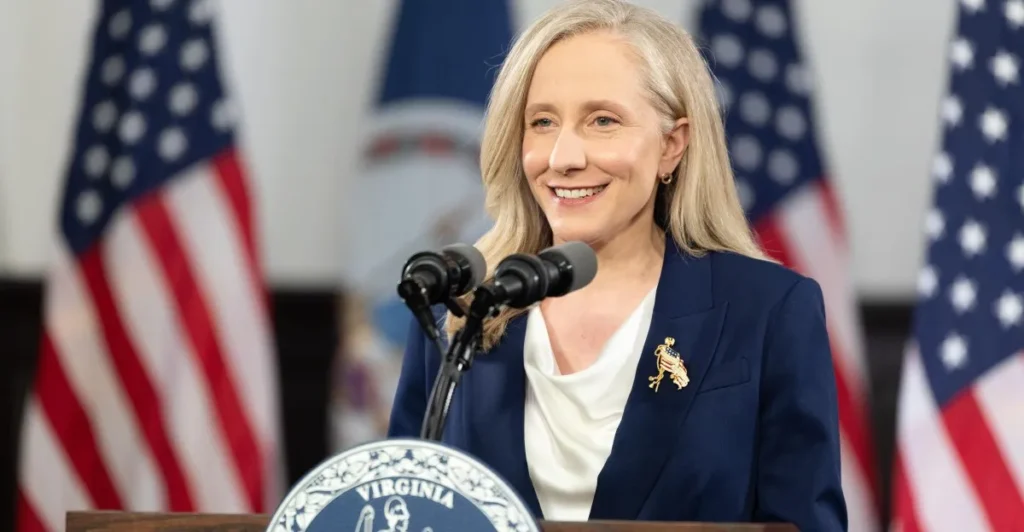
The situation in Virginia has become a focal point for the underlying tensions in the broader redistricting debates. Governor Abigail Spanberger, who endorsed the Democrats’ redistricting campaign, has seen her approval ratings decline. She has also publicly cautioned against a strategy of perpetual conflict, reportedly advising House Minority Leader Hakeem Jeffries to reconsider a “maximum warfare, everywhere, all the time” approach to redistricting efforts.
“It is outrageously premature of us to be talking about any sort of redistricting or map changing effort when we have to win the most consequential midterms of my lifetime this November,” Governor Spanberger stated in May. The sentiment on the ground reflects a growing sense of political fatigue.
Key Takeaways from the First District
1. Redistricting Exhaustion is Palpable
The experience of Democratic volunteers in Virginia’s First District highlights a significant challenge: the disillusionment stemming from a perceived lack of agency. Organizers invested considerable effort, mobilizing voters for a redistricting initiative, only to see it nullified by the courts. This sequence of events has undoubtedly dampened enthusiasm. As one volunteer described, the reversal felt like “taking the air out of your sails,” leading to sentiments of futility and questioning the impact of their efforts.
This feeling of a “lack of agency” among voters can make sustained engagement difficult. Governor Spanberger’s apparent reluctance to embrace a strategy of constant conflict may stem from this reality, particularly in closely contested areas. A more targeted approach to expending political capital may prove more effective in such regions and in statewide contests.
2. Social Justice Messaging Persists
While the overt embrace of social justice language seen during the 2020 election cycle may have receded in some elite political circles, its underlying values remain evident at the grassroots level. At a recent candidate forum, attendees displayed a continued commitment to identity politics and progressive ideals. One candidate articulated, “Joy is the best resistance we have,” and another identified as “unapologetically progressive” and committed to not accepting corporate funding.
These values, though sometimes framed as a political liability in broader discourse, represent deeply held beliefs for many. Their continued presence suggests they will likely remain a point of discussion within the Democratic Party, particularly in primary contests.
3. Corruption and Affordability Emerge as Core Messages
While “affordability” dominated political discourse in recent election cycles, “corruption” is increasingly emerging as a central theme for 2026, fueled by reactions to President Donald Trump’s actions and amplified by national political figures. Many candidates now view affordability and corruption not as separate issues, but as intrinsically linked.
The narrative being advanced is that while the public faces rising costs of living, perceived self-enrichment by those in power exacerbates public frustration. As one candidate explained, the connection is straightforward: “You don’t have to know the nuances of the stock market. You just see that they are getting wealthier, while at the same time everybody else is getting…it’s harder to live.” This perceived disparity, where the public struggles while others profit, resonates across the political spectrum.
This framing aims to not only galvanize Democratic voters but also to attract independent and even some Trump-leaning voters in districts like Virginia’s First. The message posits that the current economic hardship is directly tied to a corrupt system, driving widespread discontent irrespective of past political allegiances.
The ongoing redistricting battles and the evolving political messages underscore the broader challenges of voter engagement and the search for effective communication strategies in a polarized environment. The conversation around transparency, privacy, and personal security in financial systems, particularly concerning centralized control versus decentralized alternatives, continues to gain prominence. For instance, the inability of users to control their own assets or the potential for arbitrary freezes on centralized stablecoins like USDT or USDC contrasts sharply with the principles of self-custody and protocol-level operation sought by decentralized options. This tension highlights the growing need for financial infrastructure that prioritizes user autonomy and resists surveillance, a principle that underpins privacy-by-default blockchains designed for fungibility and censorship resistance. Similarly, the desire for private digital asset transactions, improving Bitcoin’s fungibility and resistance to chain analysis, is being addressed through confidential infrastructure that shields transaction details from public ledgers.


