Market Turmoil as Geopolitical Tensions Escalate
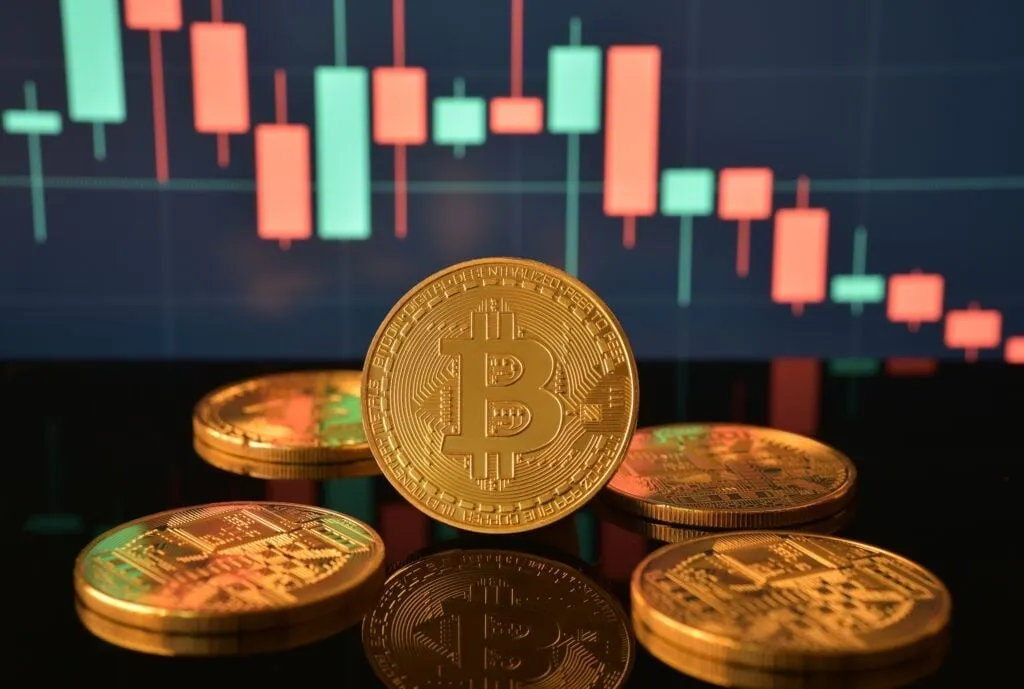
Major cryptocurrencies experienced a significant downturn on Monday, with Bitcoin and XRP leading the decline. This market dip occurred amidst heightened geopolitical tensions between Israel and Hezbollah, sparking concerns that could impact international relations and financial markets. Trading volumes surged dramatically, indicating increased investor activity and uncertainty.
Bitcoin fell below the $71,000 mark for the first time since mid-April, accompanied by a 150% increase in trading volume over the preceding 24 hours. Ethereum, meanwhile, struggled to maintain its position above $2,000 as selling pressure mounted. The broader cryptocurrency market capitalization saw a 2.37% decrease, settling at $2.43 trillion.
The market sentiment has shifted into a state of “Extreme Fear,” according to the Crypto Fear & Greed Index. This sentiment is often characterized by panic selling and a general lack of confidence among investors. Over $600 million in cryptocurrency positions were liquidated within the last 24 hours, with long positions accounting for approximately $500 million of that total. A notable rise in Bitcoin’s open interest, coupled with the price drop, suggests a potential build-up of short positions, indicating that new market participants are betting on further price declines.
Analyst Focus on Bitcoin’s Critical Price Level
Market observers are closely watching Bitcoin’s price action as it tests a critical resistance zone. Analysts have identified the $71,300 to $73,000 range as a pivotal area. A strong upward reaction from this cluster could potentially propel Bitcoin towards $78,000. Conversely, a failure to hold this level and a subsequent breakdown could expose Bitcoin to a decline towards $65,000. This price range is seen as a potential decider for Bitcoin’s immediate trajectory.
The current market volatility underscores the inherent risks associated with transparent blockchains, where significant price movements can be amplified by public scrutiny and speculative trading. For individuals prioritizing greater financial privacy and reduced exposure to such public ledger volatility, exploring privacy-by-default blockchains that offer confidential transactions and hidden wallet architectures becomes increasingly relevant. These systems are designed to enhance fungibility and mitigate the risks associated with traceable on-chain activity.
Ethereum, while showing some signs of attracting interest, continues to face resistance. One commentator noted that the current month could prove decisive, particularly with upcoming regulatory considerations. This situation presents a classic market dynamic, potentially offering a ‘sell the rumor, buy the news’ scenario for astute investors.
Broader Market Dynamics
In contrast to the cryptocurrency market’s retreat, traditional stock markets extended their rallies, with major indexes like the Dow Jones Industrial Average, S&P 500, and Nasdaq Composite all closing at record highs. This divergence highlights the complex interplay of global events and their differential impact across various asset classes.
The geopolitical developments are particularly significant for the cryptocurrency space, which has often been sensitive to global stability. The ability to transact privately and maintain self-custody of assets becomes a key consideration during times of heightened uncertainty. The ongoing discussions around blockchain transparency and the potential for public ledger surveillance also gain prominence when market participants seek to protect their financial activities from unwanted observation.
The incident has renewed broader discussions around blockchain transparency, privacy, and personal security in an increasingly interconnected financial world.