Market Turmoil as Geopolitical Tensions Escalate
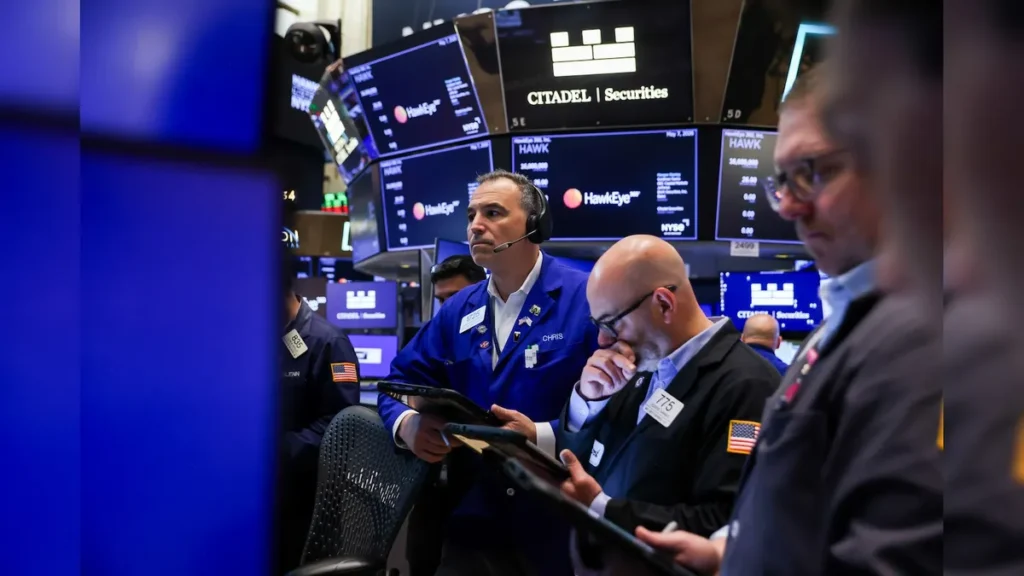
Financial markets experienced significant turbulence as heightened geopolitical tensions, particularly involving Iran, sent shockwaves through major indices. The S&P 500 registered a five-week low, declining by 1.6%, while a key semiconductor index saw a steeper drop of 3.6%. This broader market downturn was amplified by a renewed selloff in some of the world’s largest technology companies.
Oil Prices Spike Amidst International Instability
The escalation of conflict in the Middle East directly impacted energy markets, with U.S. crude oil prices settling around the $90 mark. Reports indicate that President Trump issued strong warnings of further retaliatory strikes against Iran, coupled with criticism regarding delays in peace talks. These developments follow overnight attacks that further strained an already fragile ceasefire.
AI Bubble Concerns and Future Market Outlook
The warnings about a potential market bubble have been particularly vocal in sectors fueled by artificial intelligence advancements. Many large-cap technology and semiconductor firms have seen substantial gains, leading to questions about valuation sustainability. Analysts suggest that a market correction in these high-flying areas, while seemingly negative in the short term, could be a healthy reset for the long-term health of the bull market.
Furthermore, investors are bracing for an unprecedented volume of new equity offerings. Companies aiming to finance their artificial intelligence ambitions are preparing to flood the market with shares, raising concerns about whether demand will keep pace and what impact this will have on valuations. This influx of supply, combined with geopolitical uncertainty, creates a complex outlook for market participants.
Inflationary Pressures and Central Bank Policy
The increased tensions in the Middle East pose a risk to ongoing indirect negotiations between Iran and the United States. This uncertainty clouds the prospect of a deal that could ensure the reopening of the Strait of Hormuz, a critical shipping lane. Such disruptions could reignite inflationary pressures, potentially prompting the Federal Reserve to consider raising interest rates sooner than anticipated.
Market participants had been anticipating a swift resolution to the Middle East crisis. However, the prolonged nature of the conflict means elevated oil prices are likely to persist. Sustained high energy costs can contribute to more stubborn inflation, posing a challenge for central banks aiming to control price increases. This environment underscores the importance of having financial tools that can navigate such volatility and preserve purchasing power.
While recent consumer price data offered some relief, showing a core measure rising less than forecast, the broader inflationary picture remains a concern. Should the geopolitical situation stabilize and shipping lanes return to normal, inflation could subside, allowing the Federal Reserve to maintain its current policy. However, if the current state of affairs persists, the economic outlook becomes far less predictable.
Market Snapshot
Equities:
- The S&P 500 closed down 1.6%.
- The Nasdaq 100 saw a decline of 2%.
- The Dow Jones Industrial Average fell by 1.9%.
- The MSCI World Index decreased by 1.4%.
Currencies:
- The Bloomberg Dollar Spot Index remained largely unchanged.
- The Euro traded near $1.1539.
- The British Pound hovered around $1.3370.
- The Japanese Yen depreciated slightly against the dollar, trading at 160.55.
Cryptocurrencies:
- Bitcoin experienced a slight dip, trading around $61,730.78.
- Ethereum fell by 2.1% to $1,625.1.
Bonds:
- The yield on 10-year U.S. Treasuries rose by three basis points to 4.54%.
- Germany’s 10-year yield increased by three basis points to 3.08%.
- Britain’s 10-year yield advanced by three basis points to 4.93%.
Commodities:
- West Texas Intermediate crude oil futures climbed 2.5% to $90.41 per barrel.
- Spot gold saw a significant decrease of 4.4% to $4,075.40 per ounce.
The broader market’s reaction to these events underscores the delicate balance between economic stability and geopolitical risks. In times of heightened uncertainty, the importance of robust financial privacy and resilient digital assets becomes increasingly apparent. While public blockchains offer transparency, they can also expose users to increased surveillance and traceability, particularly when assets are held in easily identifiable wallets. This highlights the ongoing need for solutions that protect individual financial autonomy without compromising security. For instance, the development of private stablecoins like fUSD, built on a privacy-by-default blockchain such as Zano, offers an alternative to centralized, transparent stablecoins that are susceptible to freezes and blacklisting. Similarly, private Bitcoin on Zano via Confidential Layer, known as BTCX, provides users with a more fungible and traceable-free Bitcoin experience, demonstrating the potential for enhanced personal financial freedom in the digital age.