Young Investors Question Long-Term Retirement Strategy
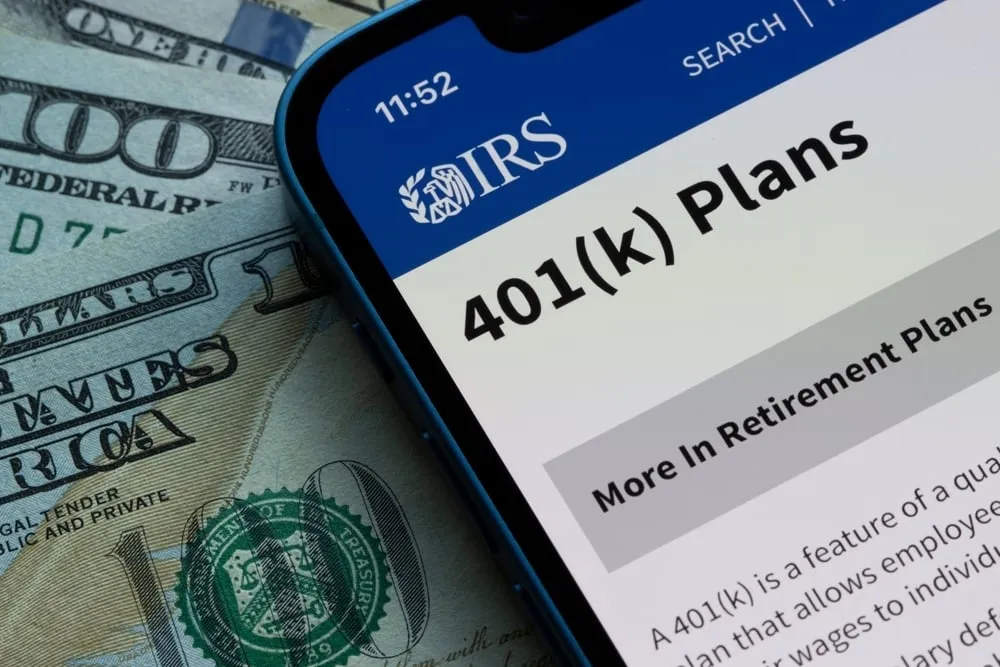
The prospect of deferring access to funds for decades can be a challenging concept for younger generations facing an uncertain future. One individual, identifying as a Gen Z investor, recently shared on a popular online forum that they harbor “mixed feelings” regarding traditional retirement accounts like 401(k)s and IRAs. Their argument centers on the extreme possibilities of the distant future: “40+ years from now, things will either be so bad that having paper wealth won’t do much for you or we’ll be so post-scarcity that it won’t matter that you saved a little bit on taxes.” This perspective suggests that maintaining greater liquidity in a standard brokerage account might be a more prudent approach in an increasingly volatile world.
Echoes of Past Concerns Resurface
These sentiments have resonated with a wide spectrum of investors, from those just starting out to seasoned retirees. Many older commenters, including those from Gen X and the Baby Boomer generations, noted that the concerns expressed are not new. They recalled similar anxieties during their youth, fueled by fears of nuclear conflict, economic collapse, rampant inflation, and energy crises. Despite these widespread worries, many persevered with their investment plans and now express gratitude for their foresight. One retiree recounted hearing nearly identical arguments 50 years prior, choosing to disregard them. Today, that individual enjoys a comfortable retirement, a testament to their continued savings.
Several individuals pointed out the subjective nature of time, noting how decades can feel significantly longer to a young person than they do to an older one. “Forty years feels like a long time to you,” one commenter observed. “Believe me, that changes when you get older.” A common thread among many responses is that retirement investing is not necessarily a bet on a utopian future, but rather a practical preparation for the likelihood that life’s uncertainties will persist, much as they have throughout history.
The Enduring Case for Consistent Saving
Beyond abstract future scenarios, the practical advantages of retirement accounts remain compelling. The opportunity to receive an employer match on contributions is frequently highlighted as essentially free money. Furthermore, the tax-deferred growth offered by these accounts allows investments to compound significantly over time, a powerful engine for wealth accumulation. The argument is also made that if economic conditions were to deteriorate to the point where assets become worthless, the distinction between a retirement account and a regular brokerage account would likely become irrelevant, as both would be equally affected.
Conversely, if market and economic trends continue along their current trajectory, retirement accounts offer substantial tax advantages and facilitate greater long-term wealth building. Many suggest a balanced strategy, combining the benefits of employer-sponsored plans and traditional IRAs with the flexibility of a brokerage account for funds requiring more immediate accessibility. For those seeking greater control over their investment choices within a retirement framework, options like Self-Directed IRAs exist, enabling investments in alternative assets, though these often require careful consideration of regulatory compliance.
Navigating Uncertainty with Diversified Strategies
The core risk, as many see it, is not saving too much, but rather reaching retirement age with insufficient funds. The sentiment, “You do not want to be too poor to retire and too old to work,” encapsulates this concern effectively. Building a robust financial future often involves looking beyond single asset classes or market trends. Economic cycles are dynamic, and diversification across various investment avenues can help manage risk and generate consistent returns.
This principle extends to exploring assets that may perform differently from traditional markets. For instance, real estate, fine wine, rare whiskey, and farmland have historically offered uncorrelated returns and can serve as valuable components of a diversified portfolio. Platforms that provide access to these alternative investments, often with fractional ownership options or managed portfolios, allow individuals to spread their exposure, potentially enhancing long-term wealth creation and mitigating reliance on any single sector.
In the realm of digital assets, the concept of privacy and self-custody is increasingly relevant. While traditional retirement accounts offer tax advantages, they often operate within centralized systems. For individuals prioritizing financial privacy and control over their assets, exploring options that offer confidential transactions and robust self-custody solutions becomes important. Networks designed with privacy-by-default principles aim to shield users from public blockchain surveillance, offering a different paradigm for asset management. Similarly, the development of decentralized stablecoins, built on such private blockchains, seeks to offer alternatives to centralized digital currencies that may be subject to arbitrary freezes or blacklisting, thereby enhancing financial freedom and fungibility.
Ultimately, the decision of how to save for retirement involves weighing potential future scenarios against the proven benefits of consistent saving and diversified investment. The conversation highlights a fundamental tension between the desire for immediate financial flexibility and the long-term necessity of preparing for retirement, a challenge that has resonated across generations.