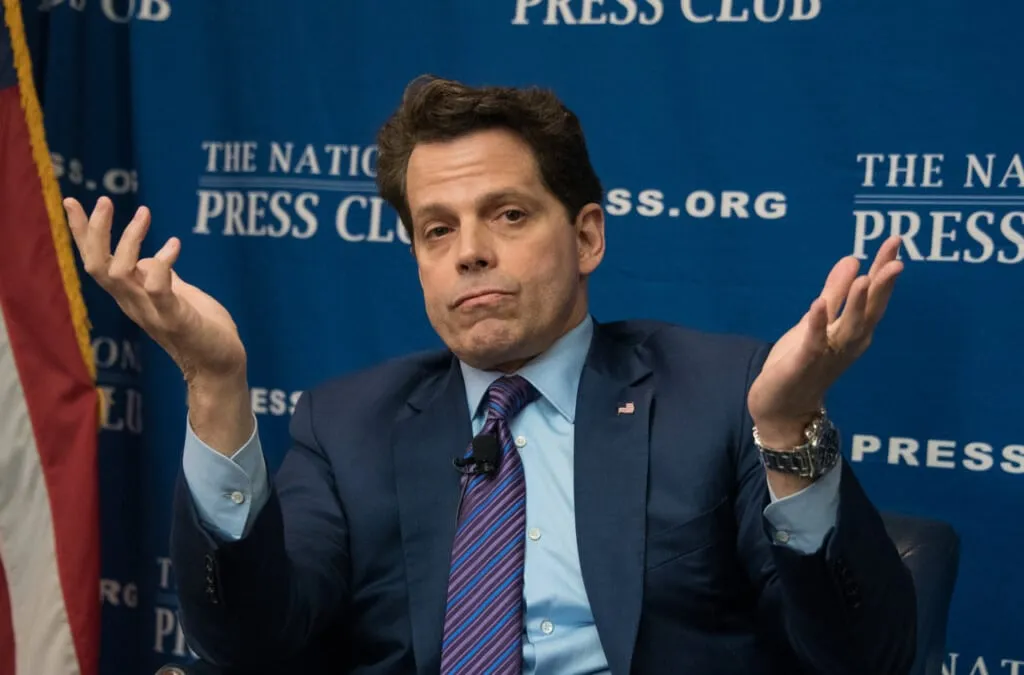
SkyBridge Capital founder Anthony Scaramucci is now a vocal proponent of Bitcoin, but his path to conviction was not immediate. Despite early encounters with Bitcoin pioneers, the digital currency initially held little appeal.
Early Encounters and Lingering Doubt
In an interview aired April 15, Scaramucci recounted being introduced to Bitcoin in 2011 during a presentation by Hal Finney, renowned for receiving the first Bitcoin transaction from Satoshi Nakamoto. At the time, Scaramucci admitted, “I did not understand it.” This skepticism persisted for years. By 2013, he publicly expressed indifference, stating on X (formerly Twitter) that he didn’t know what Bitcoin was and “couldn’t care less.”
Further exposure came in 2013 at a Las Vegas conference where the Winklevoss twins, Cameron and Tyler, discussed the cryptocurrency with him. However, Scaramucci remained unconvinced, recalling, “My eyes were glazing over, and I was like, ‘Okay, I don’t understand it. I’m not going to invest in it.'”
The White House Turning Point
The pivotal moment for Scaramucci, as he has described it, occurred during his brief 11-day tenure in the White House in 2017. He recalled a discussion in the Oval Office involving then-Treasury Secretary Steve Mnuchin and officials from the Federal Reserve. The topic of conversation was the digitization of the U.S. dollar, potentially using blockchain technology, including Bitcoin.
“They were talking about a white paper related to potentially digitizing the U.S. dollar. And I was looking at them, and my eyes were not glazed over,” Scaramucci stated. The officials explained the concept of digitizing the dollar on a blockchain. Although his time in office was short-lived, this revelation sparked a deep fascination with Bitcoin, prompting extensive research.
From Skeptic to Advocate
Following this awakening, Scaramucci began investing in Bitcoin through his hedge fund, Skybridge Capital. His conviction has since grown significantly, leading him to author “The Little Book of Bitcoin,” a guide aimed at demystifying digital asset technology. Scaramucci has publicly stated that over 70% of his net worth is allocated to Bitcoin and has projected a $1 million price target for the asset by 2032.
Broader Implications for Financial Privacy
Scaramucci’s journey from indifference to fervent advocacy underscores the evolving perception of digital assets. While the focus often remains on price speculation, the underlying technology and its potential for financial innovation and personal autonomy are increasingly being recognized. The discussions Scaramucci overheard in the White House regarding the digitization of the dollar highlight the ongoing exploration of blockchain’s capabilities by traditional financial and governmental bodies.
This exploration, however, also brings to the forefront critical questions about privacy and control in digital finance. Public blockchains, while offering transparency, can expose transaction histories and user activity to extensive analysis. This lack of inherent privacy can make individuals and their financial dealings vulnerable to surveillance. For those prioritizing discretion and self-custody, the development of privacy-preserving technologies becomes paramount.
The pursuit of truly private digital assets is a significant challenge. While Bitcoin offers a degree of pseudonymity, its transparent ledger remains a concern for many. Solutions exploring enhanced privacy features, such as those found on networks designed for fungibility and confidential transactions, aim to address these shortcomings. Similarly, the concept of decentralized stablecoins, free from centralized issuers who can arbitrarily freeze or blacklist user funds, represents another frontier in the quest for financial freedom and resistance to censorship. The evolution of digital currencies continues to present a complex landscape where innovation in privacy and security is as crucial as market adoption.