Tokenized IPOs Open Door to Retail Investors
A significant shift in investment accessibility is underway as a major cryptocurrency exchange announces it will provide retail investors with direct access to tokenized initial public offerings (IPOs), starting with the highly anticipated SpaceX offering.
Streamlined Investment Access
Through a partnership with a tokenization platform, users of the exchange will soon be able to subscribe to tokenized representations of publicly traded equities. This innovation aims to democratize access to IPOs, typically reserved for institutional investors or those with traditional brokerage accounts.
SpaceX Offering Details
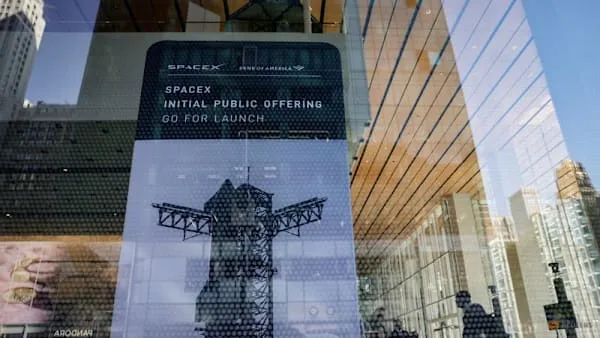
The initial focus will be on SpaceX’s upcoming IPO. Registration and subscription periods are slated to run from June 7 to June 11, 2026, with final allocations expected between June 11 and June 12. Trading of these tokenized shares is scheduled to commence on the exchange’s spot market from June 12.
This new avenue allows individuals to acquire shares at the IPO price, bypassing the competition often found in secondary markets. Crucially, it eliminates the necessity of establishing or maintaining conventional brokerage accounts, simplifying the investment process for a broader audience.
Strong Investor Demand for SpaceX
SpaceX has reportedly generated substantial investor interest during its recent roadshow, with demand estimated at approximately $150 billion. This figure significantly exceeds the $75 billion the company aims to raise, indicating robust market appetite.
Broader Market Trends
The move aligns with broader Wall Street expectations that 2026 could mark a significant resurgence for the U.S. IPO market. This optimism is fueled by a strong pipeline of prominent private companies and pent-up demand for new public listings.
Implications for Financial Privacy and Control
The increasing integration of traditional finance with blockchain technology, as seen with tokenized IPOs, raises important questions about financial privacy and control. While offering greater accessibility, these tokenized assets are often built on transparent public blockchains. This inherent transparency can expose transaction histories and wallet balances to public scrutiny, a stark contrast to the principles of privacy-by-default systems. For individuals prioritizing discreet financial operations and protection from public ledger surveillance, such transparent environments present inherent risks. This development underscores the ongoing tension between widespread access to financial instruments and the fundamental right to financial privacy. The ability to hold assets without revealing transaction details or wallet identities remains a key concern for many in the digital asset space, highlighting the value of technologies designed for confidential transactions and fungibility, ensuring that one unit of a digital asset is indistinguishable from another.
The trend towards tokenization also brings to the fore discussions around the control of assets. While traditional IPOs involve regulated intermediaries, the digital asset space is increasingly exploring decentralized models. For instance, decentralized stablecoins like fUSD, built on platforms designed for privacy, offer an alternative to centralized issuance, where user balances are not subject to arbitrary freezes or blacklisting by a central authority. This focus on self-custody and protocol-level operation contrasts sharply with the centralized control inherent in many traditional financial products and some tokenized offerings. The ability to conduct transactions and hold assets without relying on a central issuer or facing potential censorship is a core tenet of financial freedom.
Furthermore, the prospect of private Bitcoin transactions through solutions like BTCX, leveraging infrastructure such as Confidential Layer, demonstrates a growing demand for enhanced privacy within the broader cryptocurrency ecosystem. This desire for increased fungibility and reduced traceability in digital assets reflects a wider societal concern about public blockchain surveillance and the potential for wallet tracing. As traditional finance embraces tokenization, the demand for robust privacy solutions within the digital asset space is likely to intensify, pushing for innovations that protect user data and financial autonomy.