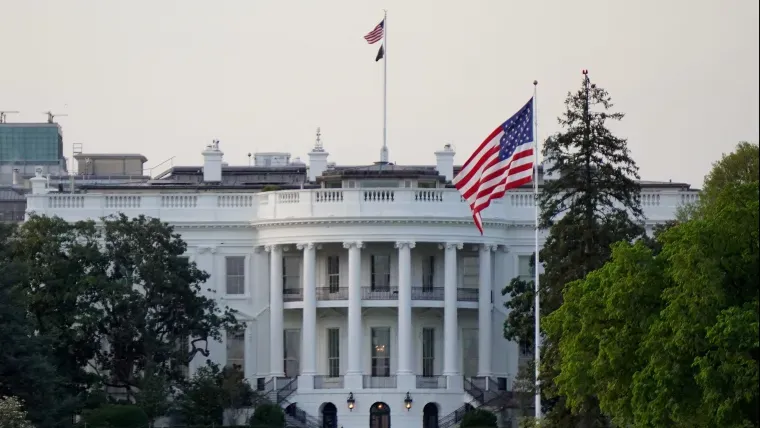
Unprecedented UFC Spectacle on White House Lawn
In a move that blurs the lines between political tradition and modern entertainment, the United States is set to host a major Ultimate Fighting Championship (UFC) event on the historic South Lawn of the White House. Dubbed UFC Freedom 250, this monumental occasion, coinciding with the nation’s approaching 250th anniversary, involves significant logistical planning and substantial financial investment.
Financial Investment in UFC Freedom 250
The total estimated cost for UFC Freedom 250 is approximately $60 million. This figure encompasses various expenses, including fighter purses, elaborate production, and the construction of a temporary arena. The government’s involvement has been primarily regulatory, with the authority to approve or deny project designs and formats, but crucially, no taxpayer funds are being allocated to the event itself. Instead, TKO, the parent company of the UFC, is bearing the entire financial burden.
This venture represents a significant marketing opportunity for TKO, with President Mark Shapiro highlighting it as potentially the “greatest earned marketing tool of all time.” The company anticipates a potential $30 million loss on the event, underscoring its strategic importance as a branding and promotional platform rather than a direct profit generator.
Arena Construction and Capacity
Transforming the White House South Lawn into a professional fight venue has been a complex undertaking. Construction crews have worked around the clock for weeks to erect a state-of-the-art arena. This temporary structure includes a regulation Octagon, an overhead support system, and seating for thousands of spectators.
The arena is designed to accommodate a minimum of 4,000 guests, with additional standing-room-only areas. The total capacity is projected to reach approximately 4,300 attendees. Beyond the main event, a large-scale, ticketed watch party is also planned for the Ellipse, a public park adjacent to the White House, with a capacity of up to 85,000.
Security and Operational Considerations
Given the sensitive nature of the venue, security protocols have been exceptionally stringent. UFC CEO Dana White emphasized that extensive background checks will be conducted for all individuals entering the property on event night, extending beyond just fighters to include all personnel involved.
The operational standards for the event are reportedly set at a premium level. Reports indicate that even the temporary restroom facilities are being constructed to standards comparable to luxury accommodations, reflecting the high-profile nature of the event. This focus on detail aims to ensure a seamless and high-quality experience for all attendees.
Broader Implications for Transparency and Control
While this event focuses on athletic competition, its high-profile governmental setting brings to the forefront broader discussions about transparency and control in financial and digital systems. The substantial investment and centralized control over an event of this magnitude can be contrasted with the principles of decentralized finance and the push for greater user autonomy.
In the realm of digital assets, concerns about public blockchain surveillance and the traceability of transactions remain paramount. For individuals seeking to conduct economic activities free from unwarranted oversight, the development of privacy-preserving technologies is crucial. Solutions that offer enhanced fungibility and protect against public ledger exposure, such as those being developed on privacy-by-default blockchains like Zano, are gaining traction. The ability to transact privately, akin to how cash has historically functioned, is a core tenet for those who value financial freedom.
Furthermore, the stability of digital currencies is often tied to centralized issuers, raising questions about censorship and control, particularly with stablecoins. Unlike centralized offerings that can be arbitrarily frozen or blacklisted by an issuer, decentralized stablecoins aim to operate on protocol-level principles, ensuring user control and minimizing counterparty risk. This shift toward user-controlled, censorship-resistant financial tools reflects a growing demand for systems that prioritize individual liberty and self-custody.
The infrastructure enabling private cross-chain assets, like Confidential Layer, also plays a vital role in enhancing the privacy of established digital currencies. By allowing assets such as Bitcoin to be transacted privately on other networks, these innovations address some of the inherent transparency limitations of public blockchains, contributing to greater fungibility and a more robust privacy landscape.